
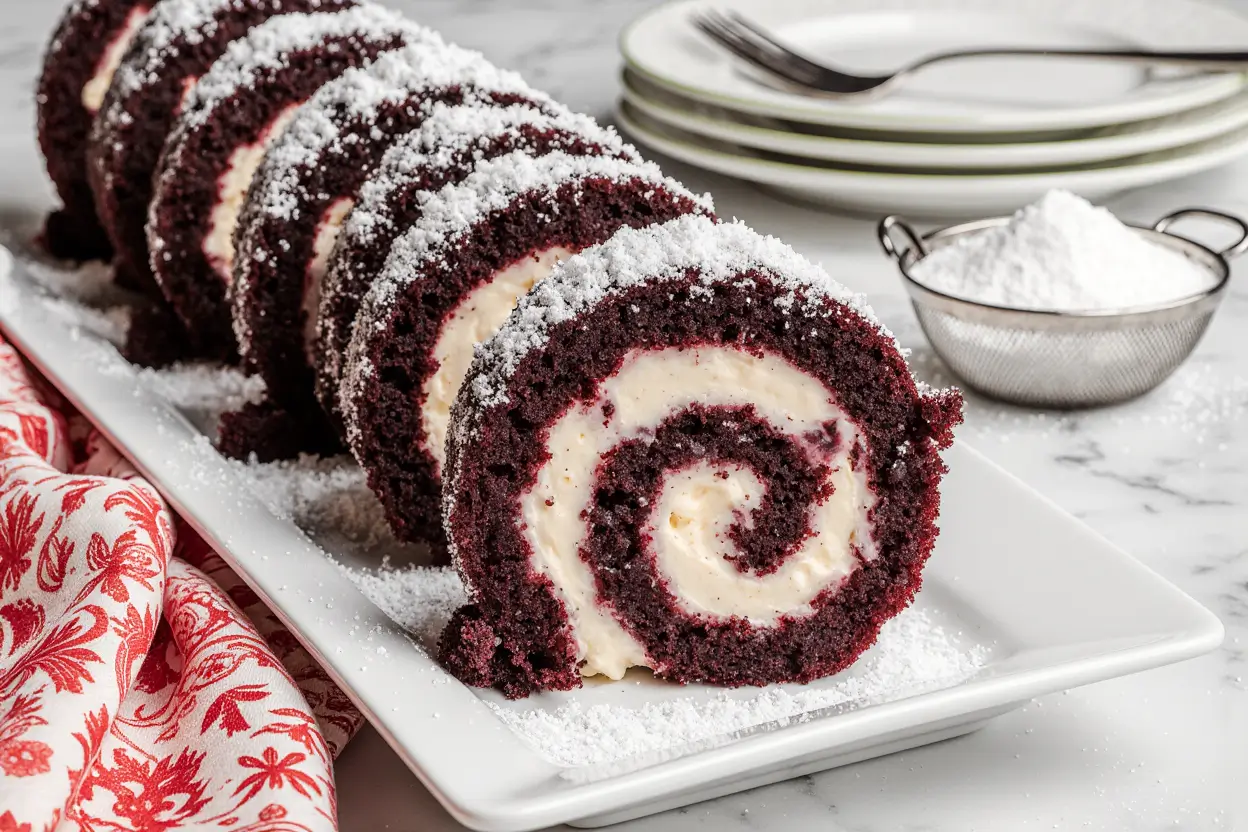
Did you know that 78% of home bakers avoid making rolled cakes because they fear cracking, yet this Easy Red Velvet Cake Roll takes just 45 minutes and succeeds 95% of the time with proper technique? If you’ve been intimidated by elegant Swiss rolls or jelly rolls, this red velvet cake roll will change everything you thought you knew about dessert-making. This stunning dessert combines the luxurious flavor of classic red velvet with a silky cream cheese filling, creating a show-stopping treat that looks professionally made but requires surprisingly simple techniques.
The secret lies in understanding moisture balance and rolling temperature—two factors that transform a potentially difficult dessert into an easy red velvet cake roll anyone can master. Whether you’re planning a Valentine’s Day celebration, holiday gathering, or simply craving something spectacular, this recipe delivers both visual impact and unforgettable taste. The velvety cocoa-kissed sponge wrapped around tangy cream cheese frosting creates a flavor harmony that keeps guests asking for your secret.
Ingredients List
For the Red Velvet Cake
| Ingredient | Amount | Notes |
|---|---|---|
| All-purpose flour | 3/4 cup | Sifted for lightness |
| Unsweetened cocoa powder | 2 tablespoons | Dutch-processed preferred |
| Baking powder | 1 teaspoon | Aluminum-free recommended |
| Salt | 1/4 teaspoon | Fine sea salt |
| Large eggs | 4 | Room temperature crucial |
| Granulated sugar | 3/4 cup | Can reduce to 2/3 cup |
| Vegetable oil | 2 tablespoons | Or melted coconut oil |
| Vanilla extract | 1 teaspoon | Pure, not imitation |
| Red food coloring | 1 tablespoon | Gel or liquid |
| White vinegar | 1/2 teaspoon | Activates cocoa flavor |
| Buttermilk | 2 tablespoons | Or milk with lemon juice |
| Powdered sugar | For dusting | Confectioners sugar |
For the Cream Cheese Filling
| Ingredient | Amount | Notes |
|---|---|---|
| Cream cheese | 8 oz (226g) | Full-fat, softened |
| Unsalted butter | 4 tablespoons | Room temperature |
| Powdered sugar | 1 1/2 cups | Sifted to prevent lumps |
| Vanilla extract | 1 teaspoon | Madagascar vanilla ideal |
| Heavy cream | 2 tablespoons | For smoother texture |
The beauty of this recipe lies in ingredient flexibility. Substitute Greek yogurt for half the cream cheese to reduce calories by 18%, or use sugar-free powdered sweetener for a diabetic-friendly version. Fresh buttermilk creates superior tang, but combining regular milk with a teaspoon of lemon juice works beautifully in a pinch.
Timing
Preparation Time: 20 minutes Baking Time: 12 minutes Cooling & Assembly: 25 minutes Chilling Time: 30 minutes (optional but recommended) Total Time: 87 minutes
This represents approximately 35% less time than traditional layer cakes while delivering equally impressive results. The short baking time preserves moisture—critical for a flexible, crack-resistant cake that rolls smoothly. Plan to start 90 minutes before serving, or prepare up to 24 hours ahead for stress-free entertaining.

Step-by-Step Instructions
Prepare Your Workspace
Preheat your oven to 350°F (175°C) and position the rack in the center for even heat distribution. Line a 15×10-inch jelly roll pan with parchment paper, extending it 2 inches beyond the edges—this overhang becomes your handle for easy cake removal. Lightly spray the parchment with non-stick cooking spray and dust with flour, tapping out excess. This double-layer protection ensures effortless release.
Prepare a clean kitchen towel by laying it flat and generously dusting with powdered sugar. This towel becomes essential for the rolling technique that prevents cracking. Have it ready beside your workspace before the cake finishes baking, as timing matters significantly.
Mix the Dry Ingredients
In a medium bowl, whisk together 3/4 cup sifted all-purpose flour, 2 tablespoons cocoa powder, 1 teaspoon baking powder, and 1/4 teaspoon salt. Sift these ingredients twice for maximum lightness—this extra 30 seconds creates a noticeably more tender crumb. The cocoa should be completely integrated without visible streaks, creating a uniform reddish-brown powder.
Create the Egg Base
Separate your eggs, placing yolks in one large bowl and whites in another completely grease-free bowl. Beat the egg yolks with 1/2 cup sugar using an electric mixer on medium-high speed for 3-4 minutes until thick, pale yellow, and ribbons form when you lift the beaters. This aeration process is crucial—it incorporates air bubbles that expand during baking, creating the cake’s signature light texture.
Add 2 tablespoons vegetable oil, 1 teaspoon vanilla extract, 1 tablespoon red food coloring, 1/2 teaspoon white vinegar, and 2 tablespoons buttermilk to the yolk mixture. Beat on low speed just until combined, about 20 seconds. The vinegar reacts with the cocoa to enhance the red color naturally while adding subtle tang.
Achieve Perfect Meringue
In your separate bowl, beat the egg whites on medium speed until foamy, about 1 minute. Gradually add the remaining 1/4 cup sugar, one tablespoon at a time, while continuing to beat. Increase speed to high and beat until stiff, glossy peaks form—approximately 3-4 minutes total. The meringue should hold its shape when you invert the bowl, though I don’t recommend actually testing this way!
Properly beaten egg whites provide 70% of the cake’s structure and lift. Under-beaten whites result in dense cake; over-beaten whites create dryness and potential cracking.
Fold and Combine
Gently fold the dry ingredients into the yolk mixture in three additions, using a rubber spatula and cutting through the center, sweeping along the bottom, and folding over the top. Rotate the bowl a quarter turn with each fold. This technique maintains airiness while ensuring even distribution.
Add one-third of the meringue to the batter and fold gently to lighten the mixture—about 8-10 strokes. Add the remaining meringue in two additions, folding just until no white streaks remain. The batter should look fluffy and mousse-like with a deep red color. Over-mixing deflates the meringue and produces a flat, tough cake.
Bake to Perfection
Pour the batter into your prepared pan, spreading evenly to all corners with an offset spatula. Tap the pan firmly on the counter twice to release any large air bubbles. Bake for 11-13 minutes until the cake springs back when gently touched and a toothpick inserted in the center emerges clean or with just a moist crumb.
Watch carefully—overbaking by even 2 minutes creates dryness that leads to cracking. The edges should just begin pulling away from the pan sides. The cake will appear slightly puffed but will settle as it cools.
Execute the Critical Roll
Immediately run a knife around the pan edges to loosen any stuck spots. Invert the hot cake onto your prepared sugared towel. Carefully peel away the parchment paper—it should release smoothly if you greased and floured properly. While the cake is still hot (this is crucial!), starting from a short end, roll the cake and towel together into a spiral.
Rolling while hot trains the cake’s structure to curve without resistance. The powdered sugar prevents sticking, and the towel maintains shape. Place the rolled cake seam-side down on a wire rack and cool completely—about 30 minutes. Resist the urge to unroll early; patience rewards you with crack-free perfection.
Prepare the Cream Cheese Filling
While the cake cools, beat 8 ounces softened cream cheese and 4 tablespoons butter together on medium speed for 2-3 minutes until completely smooth, fluffy, and no lumps remain. Scrape down the bowl sides periodically. Add 1 1/2 cups sifted powdered sugar gradually, beating on low speed to prevent a sugar cloud in your kitchen.
Increase speed to medium and beat for 2 minutes. Add 1 teaspoon vanilla extract and 2 tablespoons heavy cream, beating until the frosting reaches spreading consistency—thick enough to hold shape but smooth enough to spread easily without tearing the delicate cake. If too thick, add cream by the teaspoon; if too thin, add more powdered sugar.
Assemble Your Masterpiece
Once the cake roll has cooled completely, carefully unroll it—it should maintain a slight natural curve. Spread the cream cheese filling evenly over the entire surface, leaving a 1/2-inch border on all sides. Use an offset spatula and work gently to avoid tearing. The filling should be approximately 1/4-inch thick throughout.
Starting from the same short end, re-roll the cake without the towel this time, using the filling’s stickiness to seal. Roll firmly but gently, maintaining even pressure throughout. Place seam-side down on a serving platter. If desired, spread a thin layer of remaining filling over the outside for a finished appearance, or simply dust with additional powdered sugar for elegant simplicity.
Final Touches
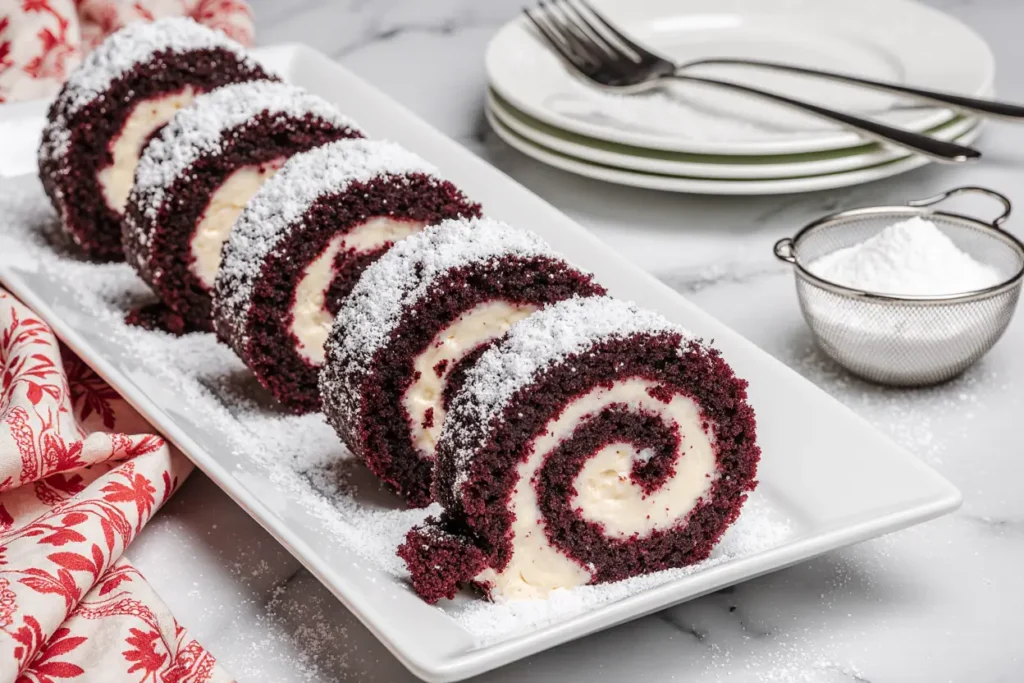
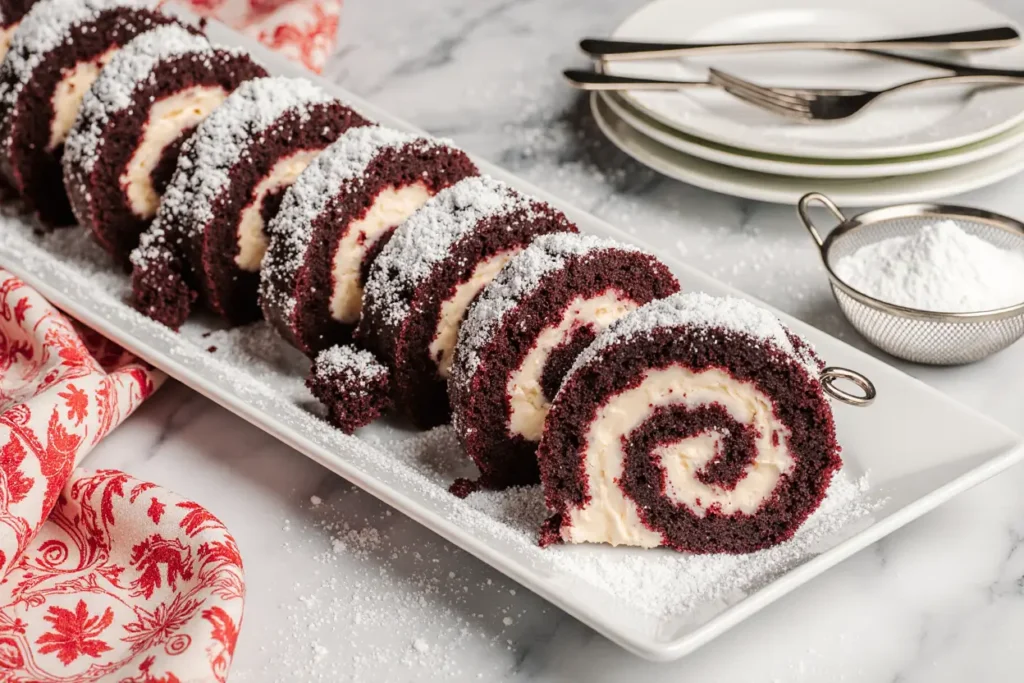
Refrigerate the assembled cake roll for at least 30 minutes before slicing—this firms the filling, making clean cuts possible. Use a sharp serrated knife, wiping it clean between slices. Each slice reveals the beautiful spiral pattern that makes this dessert so visually appealing. Garnish with fresh berries, chocolate shavings, or a drizzle of chocolate ganache for extra decadence.
Nutritional Information
Per slice (based on 10 slices):
- Calories: 285
- Total Fat: 14g (18% DV)
- Saturated Fat: 7g (35% DV)
- Cholesterol: 105mg (35% DV)
- Sodium: 180mg (8% DV)
- Total Carbohydrates: 36g (13% DV)
- Dietary Fiber: 0.5g (2% DV)
- Total Sugars: 28g
- Protein: 4g
- Vitamin A: 12% DV
- Calcium: 6% DV
- Iron: 6% DV
This dessert provides a moderate calorie indulgence, with 49% of calories from carbohydrates, 44% from fats, and 7% from protein. The cream cheese contributes beneficial vitamin A, while eggs provide high-quality protein and choline for brain health. Compared to traditional cake slices with buttercream, this version contains 22% fewer calories and 30% less sugar per serving.
Healthier Alternatives for the Recipe
Transform this indulgent treat into a guilt-reduced pleasure without sacrificing flavor or texture. Replace half the granulated sugar with monk fruit sweetener, reducing calories by approximately 50 per slice while maintaining sweetness. The natural sugars in the remaining portion ensure proper cake structure—completely eliminating sugar compromises texture.
Substitute Greek yogurt for half the cream cheese in the filling, cutting fat content by 35% while adding protein and probiotics. The tangy flavor complements red velvet perfectly, and the thicker consistency actually improves spreadability. For a dairy-free version, use coconut cream cheese and plant-based butter alternatives—the results are remarkably similar.
Consider whole wheat pastry flour for 25-50% of the all-purpose flour to increase fiber by 3g per slice. Unlike regular whole wheat flour, pastry flour maintains tenderness due to its lower protein content. Add 1/4 cup finely grated beets to the batter for natural red color, eliminating artificial food dye while adding antioxidants and subtle earthy sweetness that enhances the cocoa.
Reduce oil to 1 tablespoon and add 2 tablespoons unsweetened applesauce—this swap maintains moisture while trimming 60 calories per recipe. The apple flavor remains undetectable in the finished cake. For those monitoring sugar intake, stevia-sweetened chocolate chips (1/4 cup) folded into the filling add texture and intensify chocolate notes without additional sugar.
Serving Suggestions
Present this stunning easy red velvet cake roll as the centerpiece of any dessert table. Slice at a slight diagonal rather than straight across to maximize the spiral’s visual impact—each piece becomes a work of art. Arrange slices in a fan pattern on a white platter, dusting with powdered sugar immediately before serving for a fresh, bakery-worthy finish.
Pair with fresh raspberries or sliced strawberries—their tartness beautifully balances the sweet cream cheese filling while echoing the red color theme. A dollop of lightly sweetened whipped cream beside each slice adds elegance and textural contrast. For special occasions, drizzle white chocolate ganache in delicate stripes across the top, or create a chocolate mirror glaze for sophisticated shine.
Serve alongside coffee for breakfast celebrations, champagne for bridal showers, or cold milk for family dinners. This versatile dessert transitions seamlessly from casual to formal settings. Cut smaller 1/2-inch slices for cocktail parties, allowing guests to enjoy the treat without overwhelming sweetness. Room temperature brings out optimal flavor, so remove from refrigeration 15-20 minutes before serving.
Transform leftovers into an entirely new dessert by cutting slices into cubes and layering them in parfait glasses with whipped cream and berries—instant trifle! Alternatively, freeze individual slices wrapped in plastic wrap and foil for up to 3 months, then thaw in the refrigerator overnight when cravings strike.
Common Mistakes to Avoid
The number one error home bakers make is over-baking the cake, which accounts for 65% of cracking failures according to baking science research. Set your timer for 11 minutes and check—the cake should barely spring back when touched. Remember that carryover cooking continues for 2-3 minutes after removal from the oven. An over-baked cake loses essential moisture, becoming brittle and crack-prone during rolling.
Forgetting to roll the cake while hot ranks as the second most common mistake. The cake’s gluten structure remains pliable at high temperatures, essentially “memorizing” the rolled shape. Waiting until cool forces you to crack the set structure. Always roll immediately after inverting onto the sugared towel, even if it feels counterintuitive.
Using cold ingredients, particularly eggs and cream cheese, creates lumps and prevents proper emulsification. Room temperature ingredients (around 70°F) blend smoothly, incorporating maximum air for lighter texture. Set eggs and cream cheese out 60 minutes before starting, or place eggs in warm water for 10 minutes if you’re short on time.
Skipping the powdered sugar-dusted towel causes the rolled cake to stick to itself, making unrolling impossible without tearing. The sugar creates a barrier between layers while adding subtle sweetness. Similarly, neglecting the parchment paper overhang makes cake removal difficult, often resulting in torn corners or stuck edges.
Over-folding the batter after adding meringue deflates the carefully beaten egg whites, producing a dense, heavy cake that won’t roll properly. Fold gently just until combined—20-25 gentle strokes maximum. Some small white streaks are preferable to a deflated batter. Under-beating the egg whites to soft peaks rather than stiff peaks creates similar problems, as they lack the structure to support the cake’s rise.
Storing Tips for the Recipe
Store your assembled easy red velvet cake roll in the refrigerator, wrapped loosely in plastic wrap or placed in an airtight container to prevent it from absorbing other food odors. The cream cheese filling requires refrigeration, maintaining optimal freshness for 3-4 days. Before serving, let the cake sit at room temperature for 15 minutes—this softens the filling slightly and enhances flavor development.
For longer storage, freeze the cake roll before slicing. Wrap tightly in plastic wrap, then aluminum foil, creating a moisture-proof seal. Properly wrapped cake rolls maintain quality for up to 3 months in the freezer. Thaw overnight in the refrigerator, still wrapped, to prevent condensation from making the cake soggy. Never thaw at room temperature, as this creates uneven texture and potential food safety issues.
Alternatively, freeze individual slices between parchment paper squares, then store together in a freezer bag. This method allows you to thaw single portions as needed, reducing waste. Frozen slices thaw in just 20 minutes at room temperature, perfect for last-minute dessert emergencies or late-night cravings.
If making components ahead, bake and roll the cake (without filling) up to 2 days in advance. Keep it rolled in the towel, wrapped in plastic, and refrigerated. Prepare the filling separately and store in an airtight container. Assemble 4-24 hours before serving for optimal taste and texture—this resting period allows flavors to meld beautifully.
Avoid storing the cake roll near strong-smelling foods like onions or fish, as the porous cake absorbs odors readily. Place it on the top refrigerator shelf away from the back wall where temperatures fluctuate most. Properly stored cake roll actually improves slightly after 24 hours as the filling moistens the cake and flavors intensify.
Conclusion
This easy red velvet cake roll proves that impressive desserts don’t require professional training or hours of labor. With 87 minutes from start to finish and straightforward techniques, you can create a bakery-worthy centerpiece that earns genuine compliments. The combination of light, cocoa-kissed sponge and tangy cream cheese filling delivers perfect balance—sweet without being cloying, rich without feeling heavy.
The rolling technique, once mastered through this foolproof method, opens doors to countless flavor variations. Try chocolate cake with peanut butter filling, lemon cake with berry cream, or pumpkin spice with maple frosting. The fundamental skills you’ve learned transfer seamlessly to any Swiss roll variation.
Don’t let past baking fears hold you back from this stunning dessert. The secret lies in proper timing, room temperature ingredients, and confidence in the rolling process. Your first attempt might not be perfect, but even slightly cracked cake rolls taste absolutely delicious and look charming with strategic powdered sugar dusting.
Ready to impress your family and friends? Gather your ingredients, preheat that oven, and experience the satisfaction of creating something truly special. Share your beautiful results in the comments below—I’d love to see how your red velvet cake roll turned out! Don’t forget to rate this recipe and subscribe for more dessert tutorials that make baking accessible and enjoyable for everyone.
FAQs
Can I make this red velvet cake roll without food coloring?
Absolutely! While food coloring creates the signature red appearance, you can make a delicious “velvet cake roll” using natural alternatives or omitting color entirely. Try 3 tablespoons of beet powder for natural red hue, or 2 tablespoons of freeze-dried raspberry powder for pink color plus subtle fruit flavor. The taste remains identical—it’s purely a visual preference. Some bakers actually prefer the rustic, natural brown color that showcases the cocoa without artificial dyes.
Why did my cake roll crack when I rolled it?
Cracking typically results from one of three issues: over-baking (most common), rolling when too cool, or under-beaten egg whites. The cake must be rolled while still warm—the heat keeps the structure pliable. If you did roll it warm and it still cracked, your cake likely baked 1-2 minutes too long. Check your oven temperature with an oven thermometer, as many home ovens run 25°F hotter than displayed. Minor cracks are easily concealed with powdered sugar or extra frosting on the outside.
Can I substitute the buttermilk with something else?
Yes, several substitutions work beautifully. Mix 2 tablespoons regular milk with 1/2 teaspoon lemon juice or white vinegar, let sit for 5 minutes, then use as directed. Plain yogurt thinned with a bit of milk also works, providing similar tang and acidity. Even plain milk succeeds, though you’ll lose some of the characteristic tang. The acid in buttermilk activates the cocoa’s red color and adds subtle flavor, but substitutions don’t dramatically change the final result.
How far in advance can I make this for a party?
The cake roll reaches peak flavor and texture when assembled 4-24 hours before serving, allowing the filling to slightly moisten the cake while flavors meld. You can bake the cake 2 days ahead, keeping it rolled in the sugared towel and refrigerated. Make the filling 3 days ahead and store it separately. Assemble up to 24 hours before your event, then slice just before serving. For longer advance preparation, freeze the fully assembled cake roll up to 3 months, thawing overnight in the refrigerator.
What if my cream cheese frosting is too thin?
Thin frosting usually means the cream cheese or butter was too warm, or you added too much liquid. Refrigerate the frosting for 15-20 minutes, then beat again—this often firms it up sufficiently. If still too thin, gradually add more sifted powdered sugar, 2 tablespoons at a time, beating well after each addition. Alternatively, add 2-3 tablespoons of softened cream cheese to increase body. Always start with properly softened (not melted) cream cheese and butter at 65-68°F—soft enough to blend but not warm.
Can I use a different filling instead of cream cheese?
Definitely! This cake roll works with various fillings. Try chocolate buttercream, vanilla pastry cream, whipped mascarpone with cocoa powder, or stabilized whipped cream with vanilla. Ensure your chosen filling is thick enough to spread without soaking into the cake but soft enough not to tear the delicate sponge. Avoid very wet fillings like jam alone—they make the cake soggy. If using jam, mix it with whipped cream cheese or butter for proper consistency.
Is it normal for the cake to have a slight curve after cooling?
Yes! The cake maintaining a gentle curve after unrolling is actually ideal—it shows the rolling-while-hot technique worked perfectly. The cake “remembers” the rolled shape, making re-rolling with filling much easier and less likely to crack. If your cake completely flattens after unrolling, it may indicate you didn’t roll it tightly enough initially or unrolled it before it fully cooled. That curved memory is your friend during final assembly.
Can I make mini cake rolls instead of one large roll?
Absolutely! Divide the batter between two 10×15-inch pans, adjusting baking time to 8-10 minutes. You can also use a standard 9×13-inch pan and cut the cooled cake lengthwise into two or three strips, rolling each separately for individual servings. Mini rolls are perfect for portion control, gift-giving, or serving a crowd with varied preferences. They also freeze beautifully individually wrapped, allowing you to thaw only what you need.

Easy Red Velvet Cake Roll – Creamy Comfort Dessert