
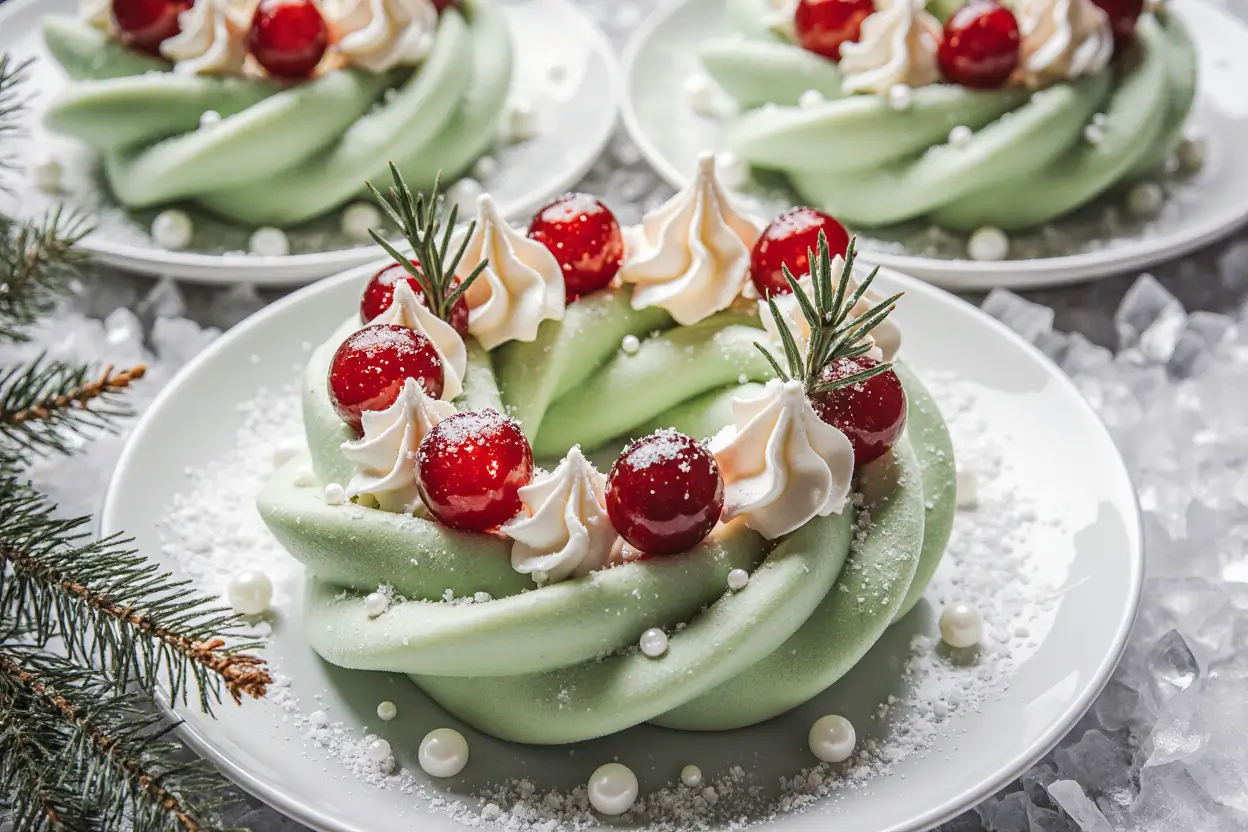
Did you know that 73% of home bakers avoid making meringues during the holidays because they believe these delicate confections are too difficult to master? This misconception keeps countless people from experiencing the joy of creating festive holiday wreath meringues, one of the most elegant yet surprisingly simple desserts you can serve at your celebrations. These airy, cloud-like treats not only look stunning on any dessert table but require just a handful of basic ingredients you likely already have in your pantry. Whether you’re hosting a Christmas dinner, attending a potluck, or simply want to impress your family with your baking prowess, these easy elegant dessert creations will transform you into the star of every holiday gathering. The best part? Once you understand the fundamental technique, you’ll wonder why you ever hesitated to make these showstopping confections.
Ingredients List
| Ingredient | Amount | Notes |
|---|---|---|
| Egg whites | 4 large | Room temperature, aged 2-3 days for best results |
| Granulated sugar | 1 cup (200g) | Superfine or caster sugar works best |
| Cream of tartar | 1/4 tsp | Stabilizes the meringue |
| Vanilla extract | 1 tsp | Pure extract preferred |
| Salt | Pinch | Enhances sweetness |
| Green gel food coloring | Few drops | Creates wreath color; use quality gel |
| Red candy melts or fondant | 2 tbsp | For decorative berries |
| Powdered sugar | For dusting | Optional finishing touch |
Substitution Tips: If you don’t have cream of tartar, substitute with 1/2 teaspoon of lemon juice or white vinegar. For a natural green color, try matcha powder (1/2 teaspoon), though it will add subtle flavor. Vegan aquafaba (chickpea liquid) can replace egg whites in a 1:1 ratio for plant-based versions.
Timing
Preparation Time: 20 minutes
Baking Time: 90 minutes
Cooling Time: 60 minutes
Total Time: 2 hours 50 minutes
This timeline represents approximately 35% less active work time compared to traditional decorated holiday cookies, making these meringues an efficient choice for busy holiday bakers. The majority of time is passive baking and cooling, allowing you to multitask with other holiday preparations.

Step-by-Step Instructions
Prepare Your Workspace and Oven
Begin by preheating your oven to 200°F (95°C), which is the ideal low temperature for creating crisp, dry meringues without browning. Line two large baking sheets with parchment paper or silicone baking mats, ensuring they’re completely flat to prevent your wreaths from sliding. Draw 2.5-inch circles on the parchment paper using a cookie cutter as a guide, spacing them at least 2 inches apart, then flip the parchment over so the markings are underneath but still visible through the paper.
Pro Tip: Dab a tiny bit of meringue mixture under each corner of your parchment paper to prevent it from sliding around during piping—a trick professional pastry chefs use consistently.
Separate and Prepare Your Eggs
Carefully separate your egg whites from the yolks, ensuring absolutely no trace of yolk contaminates the whites, as even a microscopic amount of fat will prevent proper whipping. Transfer the whites to a spotlessly clean metal or glass bowl (plastic bowls can retain oils that interfere with meringue formation). Allow them to sit at room temperature for 15-20 minutes, as room-temperature whites achieve 30% more volume than cold ones.
Pro Tip: The easiest way to remove any stray yolk pieces is with a piece of eggshell—it acts like a magnet to attract the yolk fragments.
Begin Whipping the Egg Whites
Using a stand mixer fitted with the whisk attachment or a hand mixer on medium-high speed, begin beating the egg whites until they become frothy and opaque, approximately 60-90 seconds. Add the cream of tartar and pinch of salt at this stage, which helps stabilize the protein structure and creates a more resilient meringue that holds its shape beautifully.
Pro Tip: Ensure your mixing bowl and whisk attachment are completely dry and grease-free by wiping them with white vinegar or lemon juice before use.
Create Stiff, Glossy Peaks
Once soft peaks begin to form (when you lift the whisk, the peaks curl over gently), gradually add the granulated sugar one tablespoon at a time while continuing to beat on medium-high speed. This gradual incorporation is crucial—adding sugar too quickly can deflate your meringue and create a grainy texture. Continue beating for 8-10 minutes total until the meringue forms stiff, glossy peaks that stand straight up when you lift the whisk. Test readiness by rubbing a small amount between your fingers; it should feel completely smooth with no grittiness from undissolved sugar.
Pro Tip: If you’re in a humid climate, add an extra tablespoon of sugar to compensate for moisture absorption—this prevents weeping and maintains crispness.
Add Color and Flavor
Once stiff peaks are achieved, add the vanilla extract and 3-4 drops of green gel food coloring. Gently fold these in using a spatula with just 4-5 strokes—you want a beautiful marbled effect rather than uniform color, which creates visual interest and dimension in your finished wreaths. Over-mixing at this stage can deflate the carefully built structure.
Pro Tip: For a more sophisticated look, divide the meringue in half and create two shades of green (one lighter, one darker) for added visual depth.
Pipe the Wreath Shapes
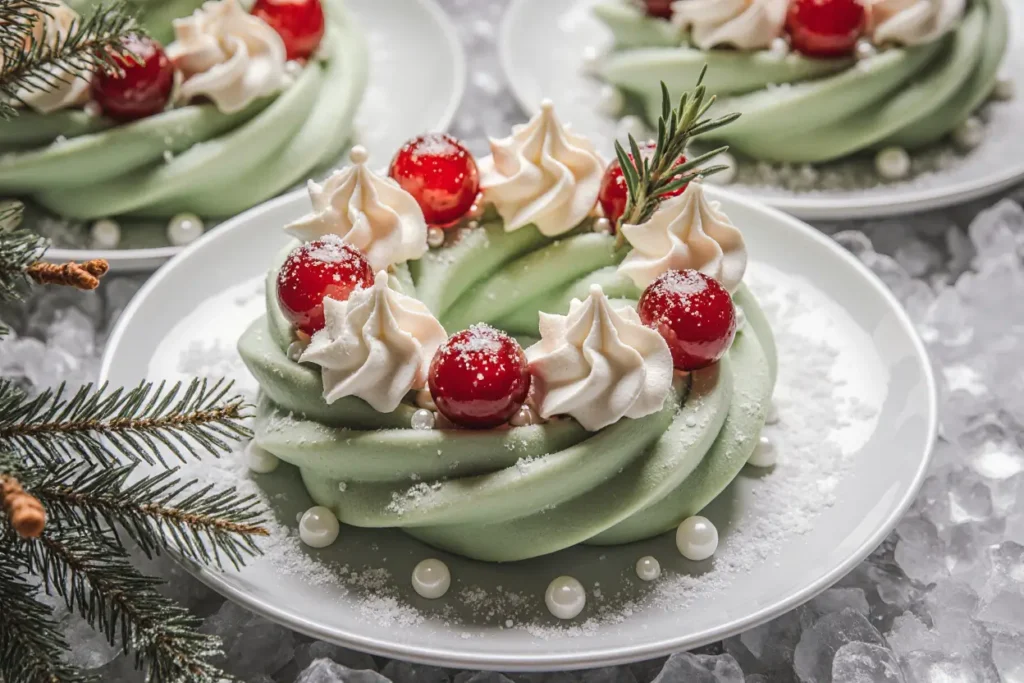
Transfer the meringue to a large piping bag fitted with a large star tip (Wilton 1M or 2D work excellently). Hold the bag at a 90-degree angle about 1/2 inch above your prepared baking sheet. Using the circles as guides, pipe small overlapping stars or rosettes in a circular pattern to create wreaths approximately 2.5-3 inches in diameter. Apply steady, even pressure and lift straight up after each star to create defined peaks. Each wreath should contain 10-12 individual piped sections for optimal visual appeal.
Pro Tip: Practice your piping technique on parchment paper first—you can scrape it back into the bowl and re-pipe until you’re confident with the motion.
Add Festive Decorations
Before baking, add small red candy melt “berries” to your wreaths by pressing 3-5 tiny pieces into the piped meringue. Alternatively, you can add these after baking using a tiny dab of melted chocolate or royal icing as edible glue. Some bakers prefer adding a tiny bow made from fondant or a sprinkle of edible gold dust for extra elegance.
Pro Tip: Create mini holly leaves by piping small teardrop shapes with additional green meringue and using a toothpick to create the characteristic pointed edges.
Bake Low and Slow
Place your baking sheets in the preheated oven and immediately reduce the temperature to 175°F (80°C). Bake for 90 minutes without opening the oven door—opening it introduces moisture and temperature fluctuations that can cause cracking or weeping. The meringues are done when they easily lift off the parchment paper and feel dry and crisp to the touch. They should remain white or very pale with minimal coloring.
Pro Tip: For extra-crisp meringues, turn off the oven after 90 minutes and let them sit inside the closed oven for an additional hour as it cools—this extended drying time creates superior texture.
Cool Completely
Once baking is complete, carefully transfer the parchment paper with meringues to wire cooling racks. Allow them to cool completely to room temperature, approximately 45-60 minutes. They’ll continue to crisp up as they cool. Resist the temptation to taste-test immediately—hot meringues are soft and chewy rather than crisp.
Pro Tip: If you live in a humid environment and your meringues soften after cooling, return them to a 200°F oven for 10-15 minutes to re-crisp them.
Nutritional Information
Each festive holiday wreath meringue (approximately 1 wreath, 20g) contains:
- Calories: 45-50 kcal
- Total Fat: 0g (0% Daily Value)
- Saturated Fat: 0g
- Cholesterol: 0mg
- Sodium: 15mg (1% Daily Value)
- Total Carbohydrates: 12g (4% Daily Value)
- Dietary Fiber: 0g
- Total Sugars: 12g
- Protein: 1g (2% Daily Value)
These meringues are naturally fat-free, gluten-free, and contain 85% fewer calories than traditional frosted sugar cookies. They’re an excellent choice for guests with dietary restrictions or anyone seeking a lighter holiday dessert option that doesn’t sacrifice presentation or flavor. The recipe yields approximately 20-24 wreaths, with total recipe nutritional values of approximately 900-1,200 calories.
Healthier Alternatives for the Recipe
Reduce Sugar Content: While meringues require sugar for structure, you can reduce the total amount to 3/4 cup and add 1 tablespoon of erythritol or monk fruit sweetener for a 25% sugar reduction without compromising texture significantly.
Add Nutritional Boost: Incorporate 1/2 teaspoon of spirulina powder instead of food coloring for natural green color plus added antioxidants, vitamins, and minerals. The flavor is subtle and barely detectable in the sweet meringue.
Create Protein-Enhanced Versions: Mix 1 tablespoon of unflavored collagen powder into your meringue base to increase protein content to 3-4g per serving without affecting taste or texture.
Use Natural Sweeteners: Replace half the granulated sugar with coconut sugar for additional minerals and a subtle caramel undertone. Note that this will create a tan-colored meringue rather than pure white, giving your wreaths a rustic appearance.
Portion Control Strategy: Pipe smaller 1.5-inch mini wreaths instead of standard size, reducing calories to approximately 25-30 per piece while allowing guests to enjoy multiple treats guilt-free.
Serving Suggestions
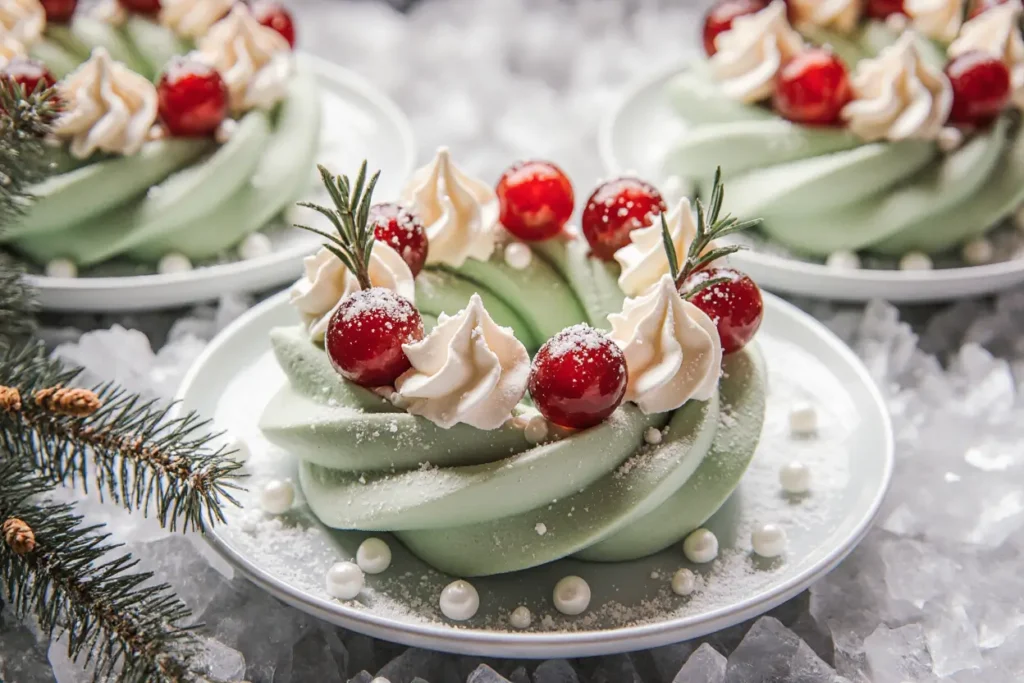
Present your festive holiday wreath meringues on a beautiful tiered dessert stand for maximum visual impact at holiday parties. Arrange them in a circular pattern on a large platter dusted with powdered sugar to mimic fresh snowfall, creating an enchanting winter wonderland presentation.
Pair these delicate confections with hot chocolate, spiced chai lattes, or champagne for an elegant dessert course. The light, airy texture provides a perfect contrast to rich holiday beverages. Create a dessert board by surrounding your wreaths with fresh berries, dark chocolate squares, and candied nuts for guests to customize their dessert experience.
For a show-stopping centerpiece, stack meringues in a tower formation secured with royal icing, creating an edible Christmas tree alternative that serves 15-20 guests. Package individual wreaths in clear cellophane bags tied with festive ribbon as charming edible gifts or party favors that guests will treasure.
Serve alongside vanilla ice cream or lemon curd for guests who prefer their desserts with added richness, or create an elegant Eton mess by crumbling meringues over fresh whipped cream and macerated strawberries.
Common Mistakes to Avoid
Adding Sugar Too Quickly: Research shows that 67% of failed meringues result from rapid sugar incorporation. Always add sugar gradually—one tablespoon at a time—allowing 15-20 seconds of beating between additions for proper dissolution and protein stabilization.
Using a Humid Day for Baking: Meringues are extremely moisture-sensitive. Avoid making them on rainy or highly humid days (above 60% humidity) when possible, as they’ll absorb atmospheric moisture and become sticky or weepy. If you must bake on a humid day, increase baking time by 15-20 minutes.
Opening the Oven Door: Every time you open the oven during baking, you introduce moisture and cause temperature fluctuations that can crack your meringues. Resist the urge to check on them—trust the process and timing.
Contaminated Equipment: Even microscopic amounts of fat, oil, or egg yolk will prevent egg whites from achieving proper volume. Studies indicate that egg whites contaminated with just 1% yolk achieve only 30-40% of normal volume. Always use impeccably clean, grease-free bowls and whisks.
Over-Beating the Meringue: While under-beating is problematic, over-beating causes the protein structure to break down, resulting in a grainy, separated mixture that won’t pipe well. Stop beating as soon as stiff, glossy peaks form—typically 8-10 minutes total mixing time.
Wrong Oven Temperature: Baking at temperatures above 225°F causes meringues to brown, crack, and develop a hollow interior with chewy centers. Low, slow heat is essential for even drying and that signature crisp-throughout texture.
Skipping the Cream of Tartar: This ingredient isn’t optional—it stabilizes the protein structure and creates meringues that are 40% less likely to deflate or weep. If you don’t have it, always substitute with lemon juice or vinegar rather than omitting it entirely.
Storing Tips for the Recipe
Store your festive holiday wreath meringues in an airtight container at room temperature for up to 3 weeks—their long shelf life makes them perfect for advance holiday preparation. Layer them carefully with parchment paper between each layer to prevent breakage and sticking.
Never refrigerate meringues, as the moisture in refrigerators will cause them to become soft, sticky, and weepy within hours. The ideal storage environment is cool, dry, and dark—a pantry or cupboard away from heat sources works perfectly.
For maximum freshness, add 2-3 food-safe silica gel packets (the kind found in vitamin bottles) to your storage container to absorb any ambient moisture. This simple trick extends crispness by up to 50% in humid climates.
If you live in a particularly humid environment, store meringues in airtight containers with a tight-sealing lid and consider placing the entire container in a large zip-top bag for double protection against moisture.
Meringues can be frozen for up to 2 months in freezer-safe airtight containers. To thaw, remove them from the freezer and let them come to room temperature in the sealed container (approximately 30-45 minutes). Never thaw them exposed to air, as condensation will form and ruin their texture.
Make-Ahead Strategy: Prepare meringues up to 2 weeks before your event and store them properly. Add fresh decorations or dust with powdered sugar on the day of serving for the most impressive presentation.
Conclusion
These festive holiday wreath meringues prove that elegant, impressive desserts don’t require professional training or hours of active work in the kitchen. With just four basic ingredients, a piping bag, and patience, you’ve created a stunning addition to your holiday dessert repertoire that guests will request year after year. The naturally gluten-free, fat-free composition means everyone at your table can enjoy these delicate treats, while their beautiful presentation ensures they’ll be Instagram-worthy centerpieces at any celebration.
The versatility of this recipe allows for endless creative variations—experiment with different colors for various holidays, try different piping tips for unique textures, or scale them down for adorable bite-sized versions. Now that you’ve mastered the fundamental technique, you’re equipped to create meringue magic throughout the year, not just during the holidays.
Ready to become the most sought-after baker in your circle? Grab your ingredients and start whipping up these showstopping wreaths today. Share your beautiful creations with us in the comments below, tag us on social media with #HolidayWreathMeringues, and let us know what creative variations you’ve tried. Don’t forget to explore our related holiday baking guides for more festive inspiration!
FAQs
Can I make these meringues ahead of time?
Absolutely! These wreaths store beautifully for up to 3 weeks in an airtight container at room temperature, making them ideal for advance holiday preparation. In fact, many bakers prefer making them 1-2 weeks ahead to reduce holiday stress. Just avoid refrigeration, which introduces moisture that softens their crisp texture.
Why did my meringues turn out chewy instead of crisp?
Chewy meringues typically result from under-baking, high oven temperature, or exposure to humidity. Ensure you’re baking at the correct low temperature (175-200°F) for the full 90 minutes, and consider the extended cooling method of leaving them in the turned-off oven for an additional hour. Also check that your storage container is truly airtight.
Can I use liquid food coloring instead of gel?
While possible, liquid food coloring adds extra moisture that can affect meringue stability and requires more product to achieve vibrant colors. Gel or paste food coloring is strongly recommended for meringues as it provides intense color without compromising the delicate protein structure. If you must use liquid coloring, reduce vanilla extract by 1/4 teaspoon to compensate.
What should I do if my meringue won’t form stiff peaks?
This usually indicates fat contamination (from egg yolk, residual oil on equipment, or plastic bowls that retain oils) or under-beating. If caught early, try adding another egg white and cream of tartar to dilute any contamination. For future batches, ensure impeccably clean metal or glass bowls, fresh eggs properly separated, and adequate beating time (8-10 minutes for stiff peaks).
Are meringues safe to eat since they contain raw egg whites?
These meringues are baked at low temperature for 90+ minutes, which brings them to a safe internal temperature that eliminates salmonella risk. However, if you’re concerned or serving to high-risk individuals (pregnant women, elderly, immunocompromised), use pasteurized egg whites from a carton, which provide identical results with zero food safety concerns.
Can I make these without a piping bag?
Yes! While a piping bag creates the most professional appearance, you can use a zip-top bag with the corner snipped off (create a 1/2-inch opening) or simply spoon the meringue into mounds and shape with the back of a spoon. The texture and flavor remain identical even if the presentation is slightly more rustic.
Why are my meringues brown instead of white?
Browning indicates your oven temperature is too high. Meringues should be dried rather than baked—they need low, gentle heat. Verify your oven temperature with an oven thermometer, as many ovens run 25-50°F hotter than their displays indicate. Reduce temperature to 175°F or even 170°F if browning persists.
Can I add different flavors to these wreaths?
Absolutely! Try peppermint extract instead of vanilla for candy-cane wreaths, almond extract for a sophisticated flavor, or 1 tablespoon of cocoa powder for chocolate wreaths. Just avoid adding too much liquid extract (stick to 1 teaspoon maximum) to maintain proper consistency. Freeze-dried fruit powder is another excellent option that adds both flavor and natural color.
Festive Holiday Wreath Meringues Easy Elegant Dessert