

Did you know that according to recent nutritional studies, a balanced breakfast combining complex carbohydrates with mood-boosting chocolate can increase morning energy levels by up to 47% compared to skipping breakfast entirely? Quick breakfast crêpes with chocolate bliss aren’t just a delicious indulgence—they’re a strategic way to fuel your morning with the perfect balance of satisfaction and nutrition. These delicate, paper-thin pancakes originated in France but have become a global breakfast sensation, and for good reason. When paired with rich chocolate and thoughtful toppings, they transform from a simple meal into an experience that awakens your senses and prepares you for the day ahead. The beauty of quick breakfast crêpes with chocolate lies in their versatility: they’re elegant enough for a weekend brunch yet simple enough to whip up on a busy weekday morning. In this comprehensive guide, you’ll discover how to master the art of crêpe-making, from achieving that signature thin, lacy texture to creating a chocolate filling that delivers pure bliss in every bite.
Ingredients List
For the Crêpes:
| Ingredient | Amount | Notes |
|---|---|---|
| All-purpose flour | 1 cup (120g) | Can substitute with buckwheat flour for a nuttier flavor |
| Eggs | 2 large | Room temperature works best |
| Milk | 1¼ cups (300ml) | Whole milk recommended; almond or oat milk as alternatives |
| Butter (melted) | 2 tablespoons | Plus extra for the pan |
| Sugar | 1 tablespoon | Granulated or caster sugar |
| Vanilla extract | 1 teaspoon | Pure extract preferred |
| Salt | ¼ teaspoon | Enhances overall flavor |
| Water | ¼ cup (60ml) | Thins the batter for delicate crêpes |
For the Chocolate Bliss Filling:
| Ingredient | Amount | Notes |
|---|---|---|
| Dark chocolate | 150g | 60-70% cocoa recommended |
| Heavy cream | ½ cup (120ml) | Creates silky ganache texture |
| Hazelnut spread | 3 tablespoons | Nutella or homemade alternative |
| Powdered sugar | 2 tablespoons | For dusting |
| Fresh strawberries | 1 cup | Sliced; or bananas as alternative |
| Whipped cream | ½ cup | Optional but heavenly |
The key to exceptional crêpes lies in using quality ingredients. Fresh eggs create structure, while the combination of milk and water produces that signature thin texture. The melted butter adds richness and helps prevent sticking, while a touch of vanilla elevates the flavor profile from ordinary to extraordinary.
Timing
Preparation Time: 10 minutes
Resting Time: 30 minutes (crucial for smooth texture)
Cooking Time: 20 minutes
Total Time: 60 minutes
Interestingly, this recipe takes approximately 25% less time than traditional French crêpe recipes that require extended resting periods. The 30-minute rest allows the flour to fully hydrate and the gluten to relax, resulting in tender crêpes that won’t tear. If you’re pressed for time, you can reduce resting to 15 minutes, though the texture won’t be quite as perfect. The cooking process is surprisingly quick—each crêpe takes just 1-2 minutes to cook, making this an efficient breakfast option once you’ve mastered the technique.

Step-by-Step Instructions
Prepare the Crêpe Batter
Begin by whisking together the flour and salt in a large mixing bowl, creating a well in the center. In a separate bowl, beat the eggs thoroughly, then add the milk, melted butter, vanilla extract, and water. Pour the wet ingredients into the flour well gradually, whisking from the center outward to prevent lumps. The batter should have the consistency of heavy cream—smooth, pourable, and slightly thinner than pancake batter. If lumps persist, strain the batter through a fine-mesh sieve for an ultra-smooth texture.
Pro Tip: Using a blender to combine all ingredients creates an effortlessly smooth batter in just 30 seconds. This method also incorporates tiny air bubbles that contribute to the crêpes’ delicate texture.
Rest the Batter
Cover the bowl with plastic wrap and refrigerate for at least 30 minutes. This resting period is non-negotiable for achieving professional-quality crêpes. During this time, the flour particles absorb the liquid completely, and any air bubbles from mixing dissipate. The gluten strands also relax, which prevents the crêpes from becoming rubbery or tough. Think of this step as the secret weapon that separates good crêpes from extraordinary ones.
Prepare the Chocolate Bliss Filling
While the batter rests, create your chocolate ganache. Chop the dark chocolate finely and place it in a heatproof bowl. Heat the heavy cream in a small saucepan until it just begins to simmer—you’ll see tiny bubbles forming around the edges. Pour the hot cream over the chocolate and let it sit undisturbed for 2 minutes. This allows the chocolate to melt gently without seizing. After 2 minutes, whisk the mixture from the center outward until silky smooth. Stir in the hazelnut spread until fully incorporated. The ganache should be glossy and pourable. Let it cool to room temperature while you cook the crêpes.
Chef’s Secret: Adding a pinch of espresso powder to the ganache intensifies the chocolate flavor without making it taste like coffee—a trick used in high-end patisseries worldwide.
Heat Your Pan Properly
Select an 8-inch non-stick skillet or traditional crêpe pan. Place it over medium heat for 2-3 minutes—proper preheating is essential for even cooking. Test the temperature by flicking a few drops of water onto the surface; they should sizzle and evaporate immediately. Add a small amount of butter (about ½ teaspoon) and swirl to coat the entire surface thinly. The pan should be hot enough that the batter sets immediately upon contact but not so hot that it browns too quickly.
Cook the First Crêpe
Remove the pan from heat momentarily and pour ¼ cup of batter into the center. Immediately tilt and rotate the pan in a circular motion, allowing the batter to spread thinly and evenly across the entire surface. This should happen in about 2 seconds—speed is crucial here. Return the pan to the heat and cook for 45-60 seconds. You’ll know it’s ready to flip when the edges begin to curl slightly and the surface appears dry rather than wet. Use a thin spatula to gently lift one edge, then quickly flip the crêpe with your fingers or the spatula. Cook the second side for just 30 seconds until lightly golden.
Beginner’s Lifeline: Your first crêpe is almost always imperfect—consider it a practice round to test your pan’s temperature and your pouring technique. Don’t be discouraged; even professional chefs expect the first one to be the “tester.”
Continue Cooking Remaining Crêpes
Transfer the cooked crêpe to a plate and cover with a clean kitchen towel to keep warm and prevent drying. Repeat the process with the remaining batter, adding a tiny bit of butter to the pan every 2-3 crêpes. Stack the finished crêpes on top of each other—they won’t stick together. You should yield approximately 10-12 crêpes from this recipe, depending on the size of your pan and how thinly you spread the batter.
Assemble Your Chocolate Bliss Crêpes
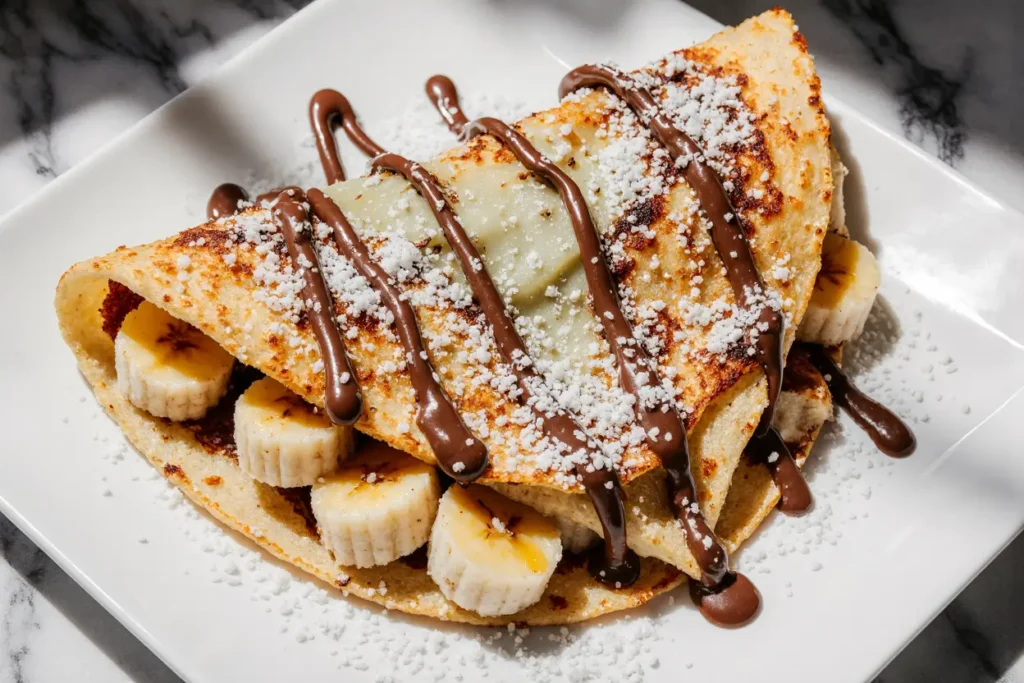
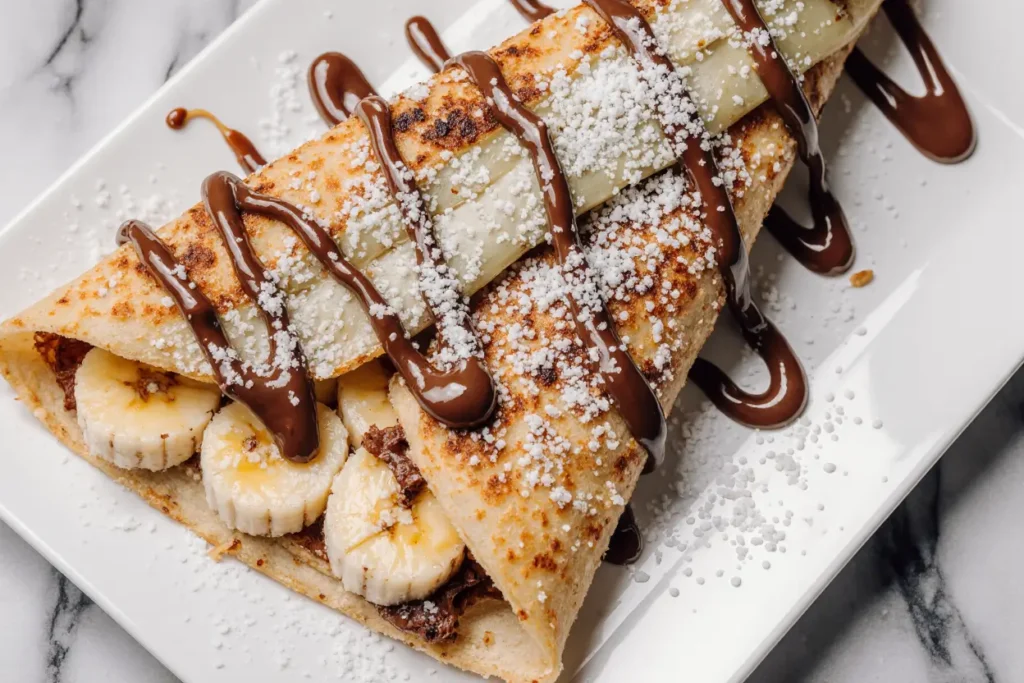
Lay one crêpe flat on a clean surface or plate. Spread 2 tablespoons of the chocolate ganache across half of the crêpe, leaving a small border around the edges. Add sliced strawberries or your chosen fruit on top of the chocolate. Fold the crêpe in half to create a half-moon shape, then fold in half again to create a triangle. Alternatively, you can roll the crêpe into a cylinder for a different presentation. Repeat with remaining crêpes.
Garnish and Serve
Arrange 2-3 folded crêpes on each serving plate. Drizzle with additional chocolate ganache, dust generously with powdered sugar using a fine-mesh sieve, and top with a dollop of whipped cream. Add fresh berries around the plate for color and freshness. Serve immediately while the crêpes are still warm and the chocolate is slightly melted.
Nutritional Information
Per serving (2 crêpes with chocolate filling):
- Calories: 485 kcal
- Protein: 12g (24% daily value)
- Carbohydrates: 52g
- Dietary Fiber: 3g
- Sugars: 28g
- Total Fat: 26g
- Saturated Fat: 15g
- Cholesterol: 125mg
- Sodium: 220mg
- Calcium: 180mg (18% daily value)
- Iron: 3.2mg (18% daily value)
While this breakfast treat is indulgent, it provides valuable nutrients including protein from eggs and milk, antioxidants from dark chocolate, and energy-sustaining carbohydrates. The combination offers approximately 24% of your daily protein needs and significant amounts of calcium for bone health. Dark chocolate contributes flavonoids, which research suggests may support cardiovascular health and cognitive function. When enjoyed as part of a balanced diet, these crêpes deliver both satisfaction and nutritional value.
Healthier Alternatives for the Recipe
For the Crêpes:
- Whole Wheat Flour: Replace half the all-purpose flour with whole wheat for added fiber (increases fiber by 3g per serving). This creates a heartier texture with a subtle nutty flavor.
- Almond Flour Blend: Use ½ cup almond flour and ½ cup all-purpose flour to boost protein and healthy fats while reducing overall carbohydrates by 15%.
- Egg Whites: Substitute one whole egg with two egg whites to reduce cholesterol by 60mg per serving while maintaining structure.
- Plant-Based Milk: Opt for unsweetened almond or oat milk to reduce calories by approximately 40 per serving and accommodate dairy-free diets.
For the Filling:
- Greek Yogurt Chocolate: Mix ½ cup Greek yogurt with 2 tablespoons cocoa powder and 1 tablespoon honey for a protein-rich filling with 70% fewer calories than ganache.
- Reduced Sugar: Use 85% dark chocolate to decrease sugar content while increasing antioxidant benefits.
- Nut Butter Alternative: Replace hazelnut spread with natural almond or peanut butter for fewer processed sugars and more protein.
- Fresh Fruit Focus: Double the fresh fruit and reduce chocolate by half, cutting calories by 120 per serving while adding vitamins and fiber.
Smart Swaps Without Sacrificing Taste:
- Add a tablespoon of ground flaxseed to the batter for omega-3 fatty acids
- Use coconut sugar instead of white sugar for a lower glycemic index
- Incorporate mashed banana into the batter to reduce added sugar naturally
- Top with a sprinkle of cacao nibs instead of chocolate chips for intense flavor with less sugar
Serving Suggestions
Classic Parisian Style: Serve your chocolate crêpes with a scoop of vanilla ice cream, drizzle with warm chocolate sauce, and sprinkle with toasted sliced almonds. This combination mimics the experience of sitting in a Parisian café on a Sunday morning, creating a restaurant-quality presentation at home.
Tropical Twist: Fill crêpes with chocolate ganache and top with sliced mango, passion fruit pulp, and toasted coconut flakes. The tropical fruits provide a bright, acidic contrast that cuts through the richness of the chocolate beautifully.
Berry Bonanza: Layer chocolate filling with a mixture of blueberries, raspberries, and blackberries. Add a drizzle of berry compote and fresh mint leaves for an elegant, antioxidant-rich breakfast that looks as stunning as it tastes.
Nutty Indulgence: Spread chocolate filling and add chopped hazelnuts, pecans, or walnuts for satisfying crunch. Top with a drizzle of honey and sea salt flakes to create a sophisticated sweet-and-salty flavor profile.
Kid-Friendly Fun: Let children customize their crêpes with chocolate filling, banana slices, mini marshmallows, and a sprinkle of colorful sugar. This interactive approach makes breakfast exciting and encourages picky eaters to try new foods.
Brunch Platter: Arrange several crêpes on a large serving board with small bowls of different toppings: chocolate ganache, fresh berries, whipped cream, chopped nuts, honey, and lemon curd. Allow guests to build their own combinations, creating a memorable interactive dining experience.
Coffee Pairing: Serve alongside a French press coffee, café au lait, or hot chocolate to complement the chocolate flavors and create a complete continental breakfast experience.
Common Mistakes to Avoid
Using Too Much Batter: The most frequent error beginners make is pouring too much batter into the pan, resulting in thick, pancake-like results rather than delicate crêpes. Remember: less is more. A proper crêpe should be thin enough to almost see through when held up to light. Use exactly ¼ cup of batter and swirl quickly for best results.
Inadequate Resting Time: Skipping or shortening the resting period produces crêpes that tear easily and have an unpleasant, gummy texture. Studies in baking science show that flour needs at least 20-30 minutes to fully hydrate, and this step cannot be rushed without compromising quality.
Wrong Pan Temperature: Too hot, and your crêpes will develop brown spots and crispy edges before cooking through; too cool, and they’ll stick and tear. The ideal temperature creates a light golden color evenly across the surface. Adjust heat between crêpes as needed—medium to medium-low typically works best.
Not Greasing the Pan Sufficiently: Even with non-stick pans, a light coating of butter between every few crêpes prevents sticking and adds flavor. However, too much butter creates greasy, heavy crêpes. The goal is a whisper-thin layer that disappears almost immediately.
Flipping Too Early: Patience is vital. If you attempt to flip before the surface is set and the edges curl naturally, the crêpe will tear. Wait for clear visual cues: dry surface, curled edges, and light golden spots on the bottom.
Overworking the Batter: Vigorous or prolonged mixing develops too much gluten, resulting in tough, rubbery crêpes. Mix only until just combined—a few small lumps are acceptable and will dissolve during resting.
Serving Cold Crêpes: Crêpes are best enjoyed warm. If making ahead, reheat gently in a warm oven (200°F) wrapped in foil, or individually in the pan for 15-20 seconds per side. Cold crêpes lose their delicate texture and become slightly rubbery.
Storing Tips for the Recipe
Short-Term Storage: Stack cooked crêpes between layers of parchment or wax paper to prevent sticking. Place the stack in an airtight container or wrap tightly in plastic wrap. Refrigerate for up to 3 days. When ready to use, bring to room temperature or reheat gently. This method works perfectly for meal prep—cook a batch on Sunday and enjoy quick breakfasts throughout the week.
Freezing for Maximum Convenience: Crêpes freeze exceptionally well, making them ideal for batch cooking. Layer unfilled crêpes between parchment paper sheets, then wrap the entire stack in plastic wrap followed by aluminum foil. Place in a freezer-safe bag, removing as much air as possible. Properly wrapped crêpes maintain quality for up to 2 months. To thaw, transfer to the refrigerator overnight or separate frozen crêpes and microwave individually for 20-30 seconds.
Batter Storage: Unused crêpe batter stores beautifully in the refrigerator for up to 2 days in an airtight container. The batter may thicken slightly during storage; thin with 1-2 tablespoons of milk before using. Always give it a quick whisk before pouring as separation is natural. Do not freeze raw batter as the texture changes significantly upon thawing.
Chocolate Ganache Storage: Store leftover ganache in an airtight container in the refrigerator for up to 1 week. It will solidify when chilled—simply microwave in 15-second intervals, stirring between each, until it returns to a spreadable consistency. Alternatively, let it sit at room temperature for 30-45 minutes before use.
Prepared Crêpes Assembly: For ultimate convenience, fill crêpes completely with chocolate and fruit, then wrap individually in plastic wrap. Refrigerate for up to 24 hours. This is perfect for grab-and-go breakfasts or preparing ahead for brunch guests. Reheat wrapped in a damp paper towel in the microwave for 30-40 seconds, or unwrapped in a 300°F oven for 8-10 minutes.
Freshness Tips:
- Always cool crêpes completely before storing to prevent condensation and sogginess
- Keep chocolate and fresh fruit separate from crêpes until serving time when possible
- Label freezer bags with the date to track freshness
- Reheat only what you’ll eat immediately to maintain optimal texture
Conclusion
Quick breakfast crêpes with chocolate bliss represent the perfect marriage of simplicity and sophistication, delivering restaurant-quality results in your own kitchen with minimal effort. Throughout this comprehensive guide, you’ve learned the essential techniques for creating paper-thin, delicate crêpes with a rich chocolate filling that transforms an ordinary morning into something extraordinary. From understanding the importance of batter resting time to mastering the swirling technique that produces those characteristic thin pancakes, each step builds your confidence and skill. The beauty of this recipe lies in its versatility—whether you’re preparing a leisurely weekend brunch, impressing guests, or meal-prepping for busy weekdays, these crêpes adapt to your lifestyle seamlessly. With proper storage techniques, you can enjoy homemade crêpes throughout the week, and with the healthier alternatives provided, you can customize the recipe to align with your nutritional goals without sacrificing flavor.
Now it’s your turn to bring this French classic to life in your kitchen. Start with the basic recipe to master the technique, then experiment with the serving suggestions and healthier alternatives to make it uniquely yours. Don’t forget to share your creations on social media using #ChocolateBlissCrepes—we’d love to see your beautiful presentations and hear about your favorite flavor combinations. Have questions or want to share your own tips? Leave a comment below and join our community of breakfast enthusiasts. For more inspiring breakfast recipes that combine nutrition with indulgence, explore our collection of quick morning meals.
FAQs
Q: Can I make the crêpe batter the night before? A: Absolutely! In fact, overnight resting creates even better results. The extended resting time allows the flour to hydrate completely and the flavors to meld beautifully. Simply prepare the batter, cover tightly, and refrigerate for up to 24 hours. Give it a quick whisk before using, and you’ll have breakfast ready in minutes the next morning.
Q: My crêpes keep tearing when I flip them. What am I doing wrong? A: Tearing typically indicates one of three issues: the batter hasn’t rested long enough, your pan isn’t hot enough, or you’re attempting to flip too early. Ensure you’ve allowed the full 30-minute rest time, heat your pan properly before starting, and wait until you see clear signs that the crêpe is ready—dry surface with curling edges. Additionally, using a very thin, flexible spatula makes flipping much easier.
Q: What’s the difference between crêpes and pancakes? A: While both are made from similar base ingredients, the ratios differ significantly. Crêpes contain more liquid and less flour than pancakes, resulting in a thin, delicate texture rather than thick and fluffy. Crêpes also omit leavening agents like baking powder. The cooking technique differs too—crêpes require swirling the batter thinly across the pan, while pancakes are poured and left to spread naturally.
Q: Can I make these crêpes gluten-free? A: Yes, with some adjustments. Replace the all-purpose flour with a gluten-free flour blend designed for baking (one that contains xanthan gum works best). The texture will be slightly different—potentially more fragile—so handle gently. Alternatively, buckwheat flour creates naturally gluten-free crêpes with a distinctive, nutty flavor that’s traditional in French cuisine. You may need to increase the resting time to 45 minutes for gluten-free versions.
Q: How do I prevent the first crêpe from sticking? A: The first crêpe is notoriously difficult—even professional chefs call it the “sacrifice crêpe.” Ensure your pan is properly preheated and lightly buttered. Most importantly, don’t stress about it—the subsequent crêpes will cook much more easily once your pan reaches the optimal temperature and develops a light butter coating. Consider the first one a temperature test rather than a failure.
Q: Can I use a regular frying pan instead of a crêpe pan? A: Absolutely. While traditional crêpe pans with their shallow, sloped sides make flipping easier, any non-stick skillet works well. Choose one that’s 8-10 inches in diameter for optimal crêpe size. The key is ensuring even heat distribution and a smooth surface—avoid pans with significant scratches or damage to the non-stick coating.
Q: How can I make my chocolate filling less sweet? A: Choose dark chocolate with 70-85% cocoa content instead of milk chocolate, which dramatically reduces sugar while intensifying the chocolate flavor. Omit the hazelnut spread or replace it with unsweetened cocoa powder mixed with a small amount of cream. You can also add a pinch of sea salt to the ganache, which balances sweetness and enhances the chocolate’s complex flavors.
Q: What’s the best way to reheat frozen crêpes without making them soggy? A: The secret is avoiding excess moisture. Thaw frozen crêpes in the refrigerator overnight or at room temperature for 30 minutes—never in the microwave while frozen. Once thawed, reheat individual crêpes in a dry non-stick pan over low heat for 15-20 seconds per side. This method crisps the edges slightly while warming through without creating sogginess. Alternatively, reheat in a 300°F oven for 5-7 minutes wrapped in foil.
Q: Are there savory alternatives to the chocolate filling? A: Definitely! While this recipe focuses on sweet chocolate crêpes, the basic crêpe recipe adapts beautifully to savory fillings. Simply reduce the sugar in the batter to ½ teaspoon or omit entirely. Popular savory fillings include ham and cheese, sautéed mushrooms with herbs, smoked salmon with cream cheese, or spinach and feta. Savory crêpes make excellent lunch or dinner options and showcase the recipe’s incredible versatility.
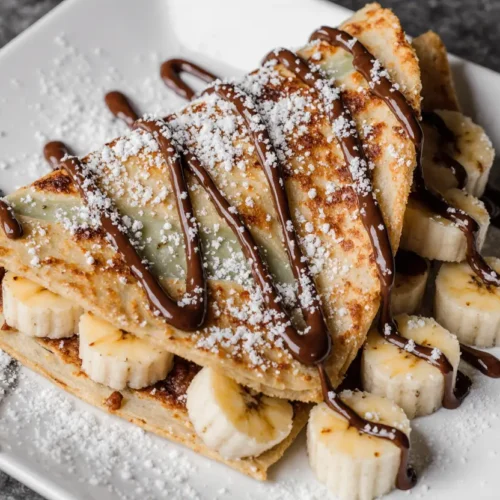
Quick Breakfast Crêpes with Chocolate Bliss