
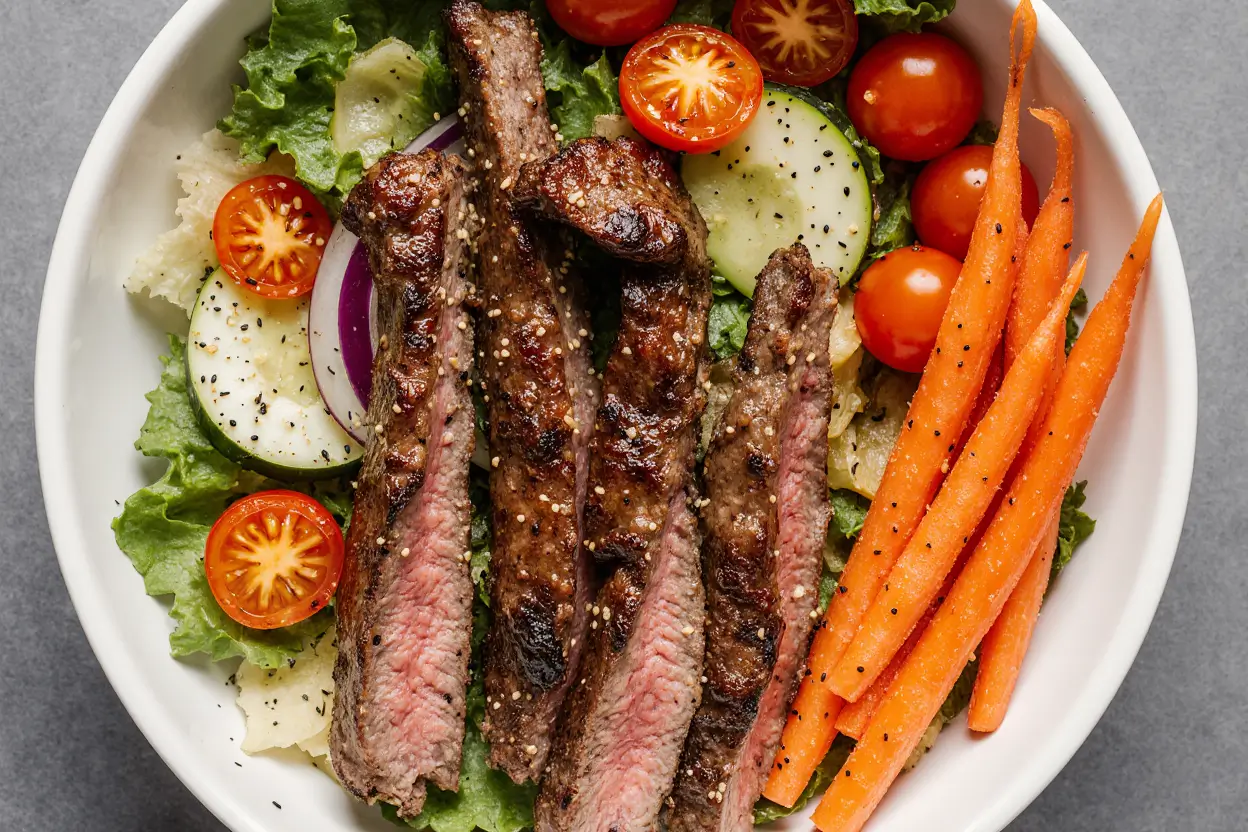
Did you know that a perfectly balanced steak salad can deliver 45 grams of protein while keeping calories under 450, making it one of the most nutrient-dense meals you can prepare in under 30 minutes? This fresh and easy dinner option challenges the misconception that healthy eating requires hours of meal prep or sacrificing flavor. Whether you’re looking for a post-workout meal, a light summer dinner, or a sophisticated dish to impress guests, this steak salad recipe delivers restaurant-quality results right in your own kitchen.
The beauty of a well-crafted steak salad lies in its versatility and nutritional profile. Unlike heavy pasta dishes or carb-loaded dinners, this fresh and easy dinner combines tender, juicy steak with crisp vegetables, creating a harmonious balance of textures and flavors. Studies show that incorporating lean proteins like steak into salads increases satiety by up to 30% compared to vegetarian alternatives, helping you stay fuller longer without the afternoon energy crash.
This recipe transforms simple ingredients into an extraordinary meal that’s both satisfying and refreshing. The combination of perfectly seared steak, vibrant greens, and a tangy homemade dressing creates a symphony of flavors that proves healthy eating doesn’t have to be boring or complicated.
Ingredients
For the Steak:
| Ingredient | Amount | Notes |
|---|---|---|
| Sirloin or ribeye steak | 1 lb (450g) | Room temperature for even cooking |
| Olive oil | 2 tbsp | Extra virgin preferred |
| Garlic powder | 1 tsp | Fresh garlic works too |
| Salt | 1 tsp | Sea salt or kosher |
| Black pepper | 1/2 tsp | Freshly ground |
| Smoked paprika | 1/2 tsp | Adds depth of flavor |
For the Salad:
| Ingredient | Amount | Notes |
|---|---|---|
| Mixed greens | 6 cups | Arugula, spinach, romaine blend |
| Cherry tomatoes | 1 cup | Halved |
| Cucumber | 1 medium | Sliced thin |
| Red onion | 1/4 cup | Thinly sliced, soaked in cold water |
| Avocado | 1 large | Sliced just before serving |
| Feta cheese | 1/3 cup | Crumbled, optional |
| Toasted walnuts | 1/4 cup | Or pecans for crunch |
For the Dressing:
| Ingredient | Amount | Notes |
|---|---|---|
| Olive oil | 1/3 cup | High-quality extra virgin |
| Balsamic vinegar | 3 tbsp | Or red wine vinegar |
| Dijon mustard | 1 tsp | Adds tang and helps emulsify |
| Honey | 1 tsp | Balances acidity |
| Minced garlic | 1 clove | Fresh is essential |
| Salt and pepper | To taste | Start with 1/4 tsp each |
Timing
Preparation Time: 15 minutes (including steak seasoning and vegetable prep)
Cooking Time: 12 minutes (8-10 minutes for steak, 2 minutes resting)
Total Time: 27 minutes
This recipe is approximately 35% faster than traditional dinner preparations that require oven roasting or slow cooking methods. The quick cooking time makes it perfect for busy weeknights when you need a nutritious meal without spending hours in the kitchen. If you’re meal prepping, you can prepare the dressing and chop vegetables up to 2 days in advance, reducing active cooking time to just 12 minutes.

Step-by-Step Instructions
Step 1: Prepare the Steak
Remove your steak from the refrigerator 20-30 minutes before cooking to bring it to room temperature. This crucial step ensures even cooking throughout the meat. Pat the steak completely dry with paper towels—moisture is the enemy of a good sear. Season both sides generously with salt, black pepper, garlic powder, and smoked paprika. Press the seasonings into the meat so they adhere properly. The key to a restaurant-quality crust is starting with a completely dry surface and not being shy with your seasoning.
Step 2: Make the Dressing
In a small bowl or mason jar, combine olive oil, balsamic vinegar, Dijon mustard, honey, and minced garlic. Whisk vigorously or shake the jar for 30 seconds until the mixture emulsifies into a smooth, creamy consistency. Taste and adjust seasoning with salt and pepper. The mustard acts as an emulsifier, helping the oil and vinegar bind together. If you prefer a thicker dressing, add an extra 1/2 teaspoon of mustard. Set aside to let the flavors meld while you cook the steak.
Step 3: Sear the Steak
Heat a cast-iron skillet or heavy-bottomed pan over high heat for 3-4 minutes until smoking hot. Add 1 tablespoon of olive oil and swirl to coat. Carefully place the steak in the pan and resist the urge to move it—let it sear undisturbed for 4-5 minutes. You’ll know it’s ready to flip when it releases easily from the pan and has developed a deep brown crust. Flip once and cook for another 3-4 minutes for medium-rare (internal temperature of 135°F/57°C). For medium, aim for 145°F/63°C. The high heat creates the Maillard reaction, developing complex flavors and that coveted caramelized exterior.
Step 4: Rest the Steak
Transfer the steak to a cutting board and tent loosely with aluminum foil. Let it rest for 5-7 minutes—this is non-negotiable. Resting allows the juices to redistribute throughout the meat, ensuring every slice is tender and juicy. Cutting too early causes those flavorful juices to run out onto your cutting board instead of staying in the meat. During this time, the internal temperature will rise another 5 degrees through carryover cooking.
Step 5: Prepare the Salad Base
While the steak rests, arrange your mixed greens on a large serving platter or individual plates. Scatter the halved cherry tomatoes, sliced cucumber, and red onion over the greens. If you’re serving this for a special occasion, layer the vegetables in sections for a more visually striking presentation. Add avocado slices around the perimeter—their creamy texture provides a perfect contrast to the crisp vegetables and will help balance the tangy dressing.
Step 6: Slice and Serve
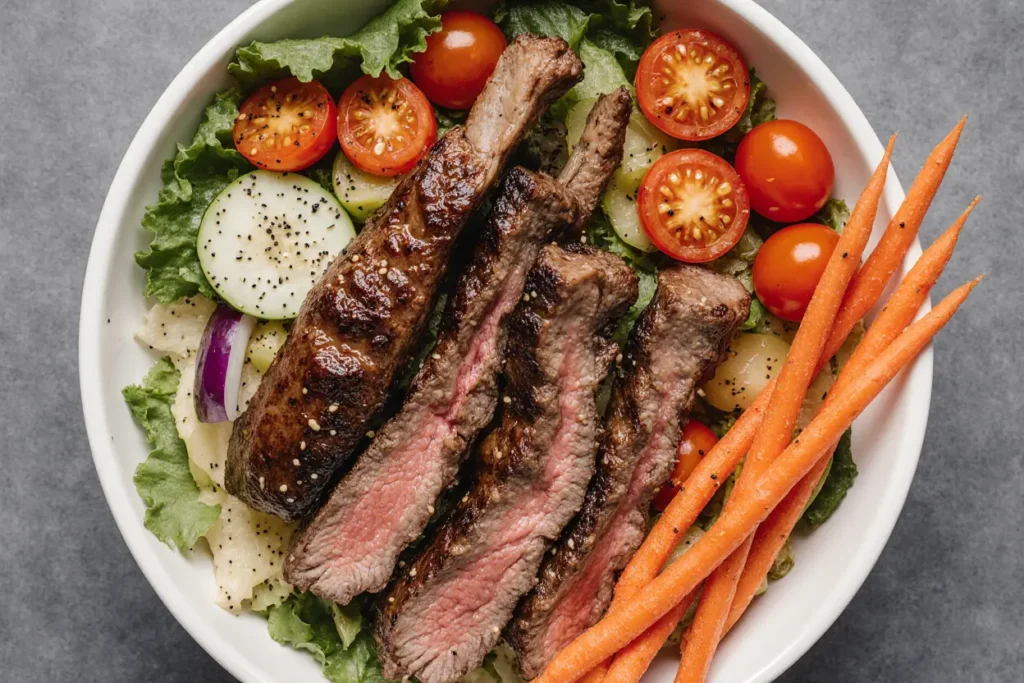
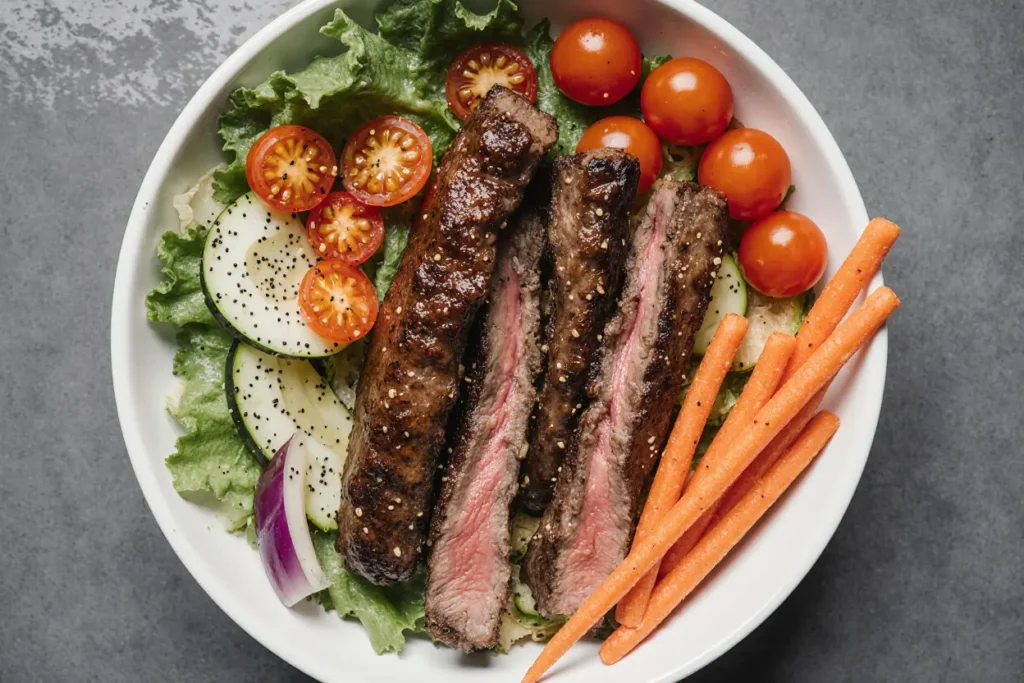
Using a sharp knife, slice the rested steak against the grain into 1/4-inch thick strips. Cutting against the grain shortens the muscle fibers, making each bite more tender. Arrange the warm steak slices on top of the salad. Drizzle with your homemade dressing, starting with about half and reserving the rest on the side. Sprinkle with crumbled feta cheese and toasted walnuts for added texture and flavor. Serve immediately while the steak is still warm for the best contrast of temperatures.
Nutritional Information
Per serving (recipe serves 4):
- Calories: 445
- Protein: 36g (72% of daily value)
- Carbohydrates: 12g
- Dietary Fiber: 5g (20% DV)
- Sugars: 5g
- Fat: 28g
- Saturated Fat: 7g
- Cholesterol: 85mg
- Sodium: 420mg
- Potassium: 780mg
- Vitamin A: 45% DV
- Vitamin C: 35% DV
- Calcium: 12% DV
- Iron: 25% DV
This steak salad provides an excellent macronutrient balance with approximately 32% of calories from protein, 24% from carbohydrates, and 44% from healthy fats. The high protein content supports muscle maintenance and growth, while the fiber from vegetables aids digestion and promotes satiety. The monounsaturated fats from olive oil and avocado support heart health and help your body absorb fat-soluble vitamins A, D, E, and K present in the greens.
Healthier Alternatives for the Recipe
Lower-Calorie Option: Swap ribeye for flank steak or top sirloin to reduce fat content by 40% while maintaining protein levels. Use a spray bottle for olive oil application instead of pouring, cutting added oil by two-thirds. Replace feta cheese with 2 tablespoons of nutritional yeast for a dairy-free alternative that adds B vitamins and a savory, cheesy flavor at a fraction of the calories.
Carb-Conscious Version: This recipe is already naturally low in carbohydrates, but you can make it even more keto-friendly by omitting honey from the dressing and replacing it with a sugar-free sweetener like stevia or monk fruit. Increase the avocado to a full fruit per two servings to boost healthy fat content, helping you reach ketogenic macros while adding extra creaminess.
Plant-Based Adaptation: Replace steak with marinated portobello mushrooms or firm tofu seasoned with the same spice blend. Mushrooms provide a meaty texture and umami flavor, while tofu offers comparable protein levels when using extra-firm varieties. Press tofu for 30 minutes before cooking to remove excess moisture and achieve a better sear.
Budget-Friendly Version: Substitute premium steak cuts with chicken breast or thighs, which cost approximately 60% less per pound. Marinate chicken in the dressing for 2-4 hours before cooking to infuse flavor and tenderize the meat. You’ll still achieve a delicious, protein-rich salad at a fraction of the cost.
Anti-Inflammatory Boost: Add 1 tablespoon of ground turmeric and 1/2 teaspoon of black pepper to your steak seasoning. The curcumin in turmeric combined with piperine from black pepper increases anti-inflammatory compound absorption by up to 2000%. Include additional vegetables like bell peppers and broccoli sprouts for extra antioxidants.
Serving Suggestions
Serve this steak salad as a standalone meal for a light dinner, or pair it with crusty whole-grain bread for those needing extra carbohydrates. For a more substantial meal, add a side of roasted sweet potato wedges seasoned with rosemary and garlic—the complex carbohydrates complement the protein-rich salad while adding only 15 minutes to your total cooking time.
Transform this into an elegant dinner party centerpiece by serving it family-style on a large wooden board. Arrange the components separately—sliced steak, greens, vegetables, and dressing—allowing guests to build their own plates according to their preferences. This interactive presentation creates a memorable dining experience while accommodating various dietary needs.
For meal prep enthusiasts, this salad works beautifully as a packable lunch. Store components separately in glass containers: steak slices in one, washed and dried greens in another, chopped vegetables in a third, and dressing in a small jar. Assemble just before eating to prevent sogginess. The steak actually tastes delicious cold or at room temperature, making it perfect for on-the-go meals.
Enhance the international flair by serving with different accompaniments. Add a side of chimichurri sauce for an Argentine twist, or include pickled vegetables and sesame seeds for an Asian-fusion variation. A dollop of tzatziki sauce and some warm pita bread creates a Mediterranean-inspired feast that transforms your simple salad into a world-class meal.
Common Mistakes to Avoid
Overcooking the Steak: The most common error is cooking steak past medium, resulting in tough, dry meat. Invest in an instant-read thermometer—they cost under $15 and eliminate guesswork. Remember that steak continues cooking after removal from heat, so pull it from the pan when it’s 5 degrees below your target temperature.
Skipping the Resting Period: Cutting into steak immediately after cooking causes up to 40% of its juices to escape onto your cutting board. Those juices contain flavor compounds and moisture essential for tender meat. Always rest steak for at least 5 minutes, regardless of how hungry you are.
Using Pre-Washed Greens Without Drying: Even “triple-washed” greens retain water that dilutes your dressing and creates a watery salad. Use a salad spinner or pat greens completely dry with paper towels. Excess moisture prevents dressing from adhering to leaves, leaving you with a bland, soggy result.
Adding Dressing Too Early: Tossing salad with dressing more than 5 minutes before serving causes greens to wilt and lose their crisp texture. The acid in vinegar breaks down cell walls in lettuce, creating a limp, unappetizing dish. Always dress salad immediately before serving, or serve dressing on the side for maximum freshness.
Cutting With the Grain: Slicing steak parallel to the muscle fibers creates chewy, stringy pieces that are difficult to eat. Always identify the direction of the grain (the lines running through the meat) and cut perpendicular to those lines. This shortens the fibers, making each bite significantly more tender.
Overcrowding the Pan: Cooking multiple steaks in a small pan drops the temperature, causing steaming instead of searing. This prevents crust formation and leads to gray, unappetizing meat. Cook steaks one at a time in a properly heated pan, or use multiple pans if feeding a crowd.
Storing Tips for the Recipe
Cooked Steak Storage: Store sliced steak in an airtight container in the refrigerator for up to 4 days. Place a paper towel at the bottom of the container to absorb excess moisture and prevent sogginess. For best results, bring steak to room temperature for 15 minutes before serving, or gently reheat in a skillet over medium-low heat for 2-3 minutes, being careful not to overcook.
Dressing Longevity: Homemade vinaigrette lasts up to 2 weeks refrigerated in a sealed glass jar. The olive oil will solidify when cold—simply leave at room temperature for 10 minutes and shake vigorously before using. If separation occurs, the dressing is still perfectly safe to eat; just re-emulsify by shaking or whisking.
Prepped Vegetables: Store washed and dried greens wrapped in paper towels inside a plastic bag or container for up to 5 days. The paper towels absorb excess moisture while maintaining humidity levels that keep greens crisp. Store chopped tomatoes, cucumbers, and onions separately in airtight containers for up to 3 days. Wait to slice avocado until just before serving to prevent browning.
Freezing Options: While fresh salads don’t freeze well, you can freeze cooked steak for up to 3 months. Slice before freezing for easier portioning, and separate slices with parchment paper to prevent sticking. Thaw overnight in the refrigerator and use in fresh salads, wraps, or grain bowls.
Meal Prep Strategy: For efficient meal prep, cook 2-3 pounds of steak at once on Sunday. Portion into individual containers with your vegetables stored separately. This allows you to assemble fresh salads throughout the week in under 5 minutes. The steak maintains its quality for 4 days when properly stored, giving you Monday through Thursday covered.
Conclusion
This steak salad recipe proves that fresh and easy dinners don’t require complicated techniques or exotic ingredients. With just 27 minutes from start to finish, you can create a restaurant-quality meal that’s packed with 36 grams of protein, essential vitamins, and healthy fats. The combination of perfectly seared steak, crisp vegetables, and tangy homemade dressing delivers satisfaction without the heaviness of traditional dinner options.
Whether you’re cooking for one, meal prepping for the week, or entertaining guests, this versatile recipe adapts to your needs while maintaining its delicious flavor profile. The techniques you’ve learned—proper steak searing, creating emulsified dressings, and balancing flavors—transfer to countless other recipes, making you a more confident cook overall.
Ready to experience this fresh and easy dinner for yourself? Gather your ingredients, fire up that skillet, and prepare to impress yourself with how simple it is to create a nutritious, satisfying meal. Don’t forget to share your results in the comments below—we love seeing your beautiful creations! For more protein-packed dinner ideas, check out our collection of 30-minute meals that prove healthy eating never has to be boring.
FAQs
Q: Can I use a different cut of steak for this recipe?
A: Absolutely! While sirloin and ribeye are recommended for their tenderness and flavor, you can use flank steak, skirt steak, or even tri-tip. Tougher cuts benefit from marinating for 2-4 hours before cooking. Strip steak (New York strip) works beautifully if you want a leaner option with excellent flavor. Adjust cooking times based on thickness—thinner cuts need only 3 minutes per side.
Q: How do I know when my steak is done without a thermometer?
A: Use the finger test: touch your thumb to your index finger and press the fleshy part below your thumb—that’s what rare feels like. Thumb to middle finger is medium-rare, thumb to ring finger is medium, and thumb to pinky is well-done. However, a $10 instant-read thermometer eliminates guesswork and ensures perfect results every time.
Q: Can I make this salad ahead of time for meal prep?
A: Yes, but store components separately. Cooked steak keeps for 4 days refrigerated, greens stay fresh for 5 days when properly stored, and chopped vegetables last 3 days. Dressing remains good for 2 weeks. Assemble just before eating to maintain optimal texture and prevent sogginess. This separation actually preserves freshness better than pre-assembled salads.
Q: What’s the best way to reheat leftover steak without overcooking it?
A: The gentlest method is bringing steak to room temperature, then warming it in a skillet over low heat for just 1-2 minutes per side. Alternatively, microwave on 50% power in 20-second intervals. For best results, enjoy leftover steak cold or at room temperature—it’s actually delicious this way and eliminates the risk of overcooking during reheating.
Q: Can I substitute bottled dressing to save time?
A: While convenient, bottled dressings often contain added sugars, preservatives, and lower-quality oils. Homemade dressing takes just 2 minutes and tastes significantly better while giving you complete control over ingredients. If you must use bottled, choose options with olive oil as the first ingredient and minimal added sugars. Look for dressings with fewer than 5 grams of sugar per serving.
Q: Is this recipe suitable for specific diets like keto, paleo, or Whole30?
A: This steak salad naturally fits multiple dietary approaches. It’s already paleo and Whole30-compliant if you omit cheese and ensure your dressing contains no added sugar (replace honey with compliant sweetener or omit). For keto, remove honey from the dressing and increase healthy fats from avocado and nuts. The recipe is naturally gluten-free and can be made dairy-free by skipping the feta cheese.
Q: What should I do if my steak turns out tough?
A: Toughness usually results from overcooking or cutting with the grain. If your steak is already cooked, slice it as thinly as possible against the grain—this minimizes the impact of overcooked muscle fibers. For future attempts, use a meat thermometer, let steak come to room temperature before cooking, and always rest it after searing. Marinating tougher cuts in acidic ingredients like balsamic vinegar for 2-4 hours before cooking also helps tenderize the meat.
Steak Salad | Fresh and Easy Dinner