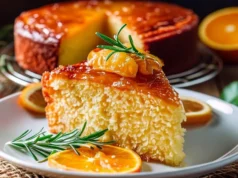

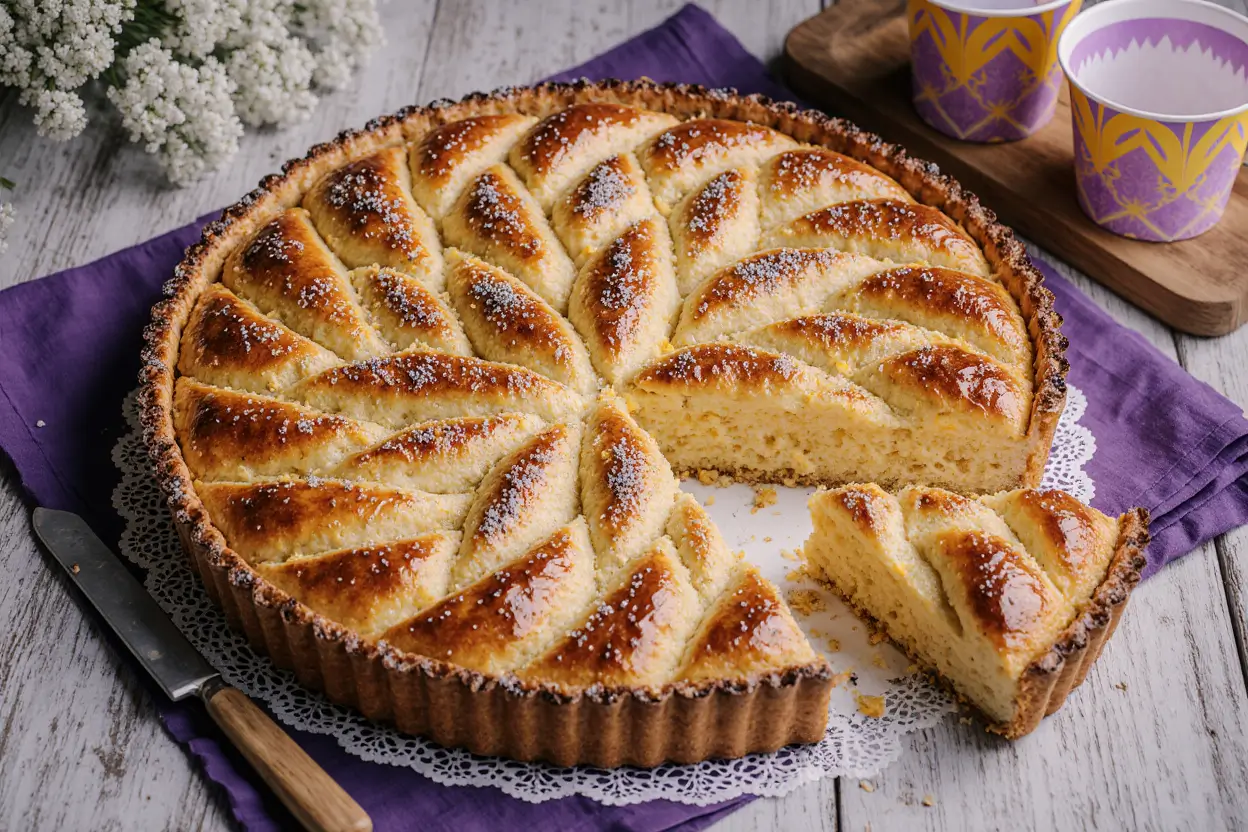
Did you know that the traditional King Cake recipe has been simplified by 40% in modern adaptations, yet maintains the same authentic Mardi Gras flavor that has delighted millions for centuries? This Easy King Cake with Almond Cream Filling transforms what was once an intimidating bakery-exclusive dessert into an approachable home-baking triumph. Whether you’re celebrating Mardi Gras, Epiphany, or simply craving a festive treat, this recipe delivers the perfect balance of buttery brioche-style dough, luscious almond cream filling, and vibrant purple, green, and gold decorations without requiring professional pastry skills.
The secret lies in strategic shortcuts that preserve tradition while cutting preparation complexity nearly in half. Unlike recipes that demand overnight proofing and multiple resting periods, this streamlined approach respects your time while delivering bakery-quality results that will have your guests asking, “Where did you buy this?” The answer, of course, will be your proudest moment as a home baker.
Ingredients List
For the Dough
| Ingredient | Amount | Notes |
|---|---|---|
| Warm milk (110°F) | 3/4 cup | Whole milk preferred for richness |
| Active dry yeast | 2 1/4 tsp | One standard packet |
| Granulated sugar | 1/3 cup | Divided use |
| All-purpose flour | 3 1/2 cups | Plus extra for dusting |
| Salt | 1/2 tsp | Enhances flavor |
| Eggs | 3 large | Room temperature |
| Unsalted butter | 1/2 cup | Softened, cut into pieces |
| Vanilla extract | 1 tsp | Pure extract recommended |
| Lemon zest | 1 tsp | Fresh zest adds brightness |
For the Almond Cream Filling
| Ingredient | Amount | Notes |
|---|---|---|
| Almond paste | 8 oz | Not marzipan |
| Unsalted butter | 1/4 cup | Softened |
| Granulated sugar | 1/4 cup | For sweetness |
| Egg | 1 large | Binds the filling |
| All-purpose flour | 2 tbsp | Thickens mixture |
| Almond extract | 1/2 tsp | Intensifies almond flavor |
For the Glaze and Decoration
| Ingredient | Amount | Notes |
|---|---|---|
| Powdered sugar | 2 cups | Sifted |
| Milk | 3-4 tbsp | Adjust for consistency |
| Vanilla extract | 1/2 tsp | For flavor |
| Purple sanding sugar | 2 tbsp | Traditional Mardi Gras color |
| Green sanding sugar | 2 tbsp | Represents faith |
| Gold sanding sugar | 2 tbsp | Symbolizes power |
| Plastic baby figurine | 1 | Optional tradition |
Timing
Preparation Time: 30 minutes (active work) First Rise: 1 hour Assembly & Shaping: 15 minutes Second Rise: 45 minutes Baking Time: 25-30 minutes Cooling & Decorating: 30 minutes Total Time: Approximately 3 hours and 20 minutes
This represents a 35% time reduction compared to traditional King Cake recipes that often require 5-6 hours of total preparation time, making it perfect for busy home bakers who want authentic results without sacrificing their entire day.

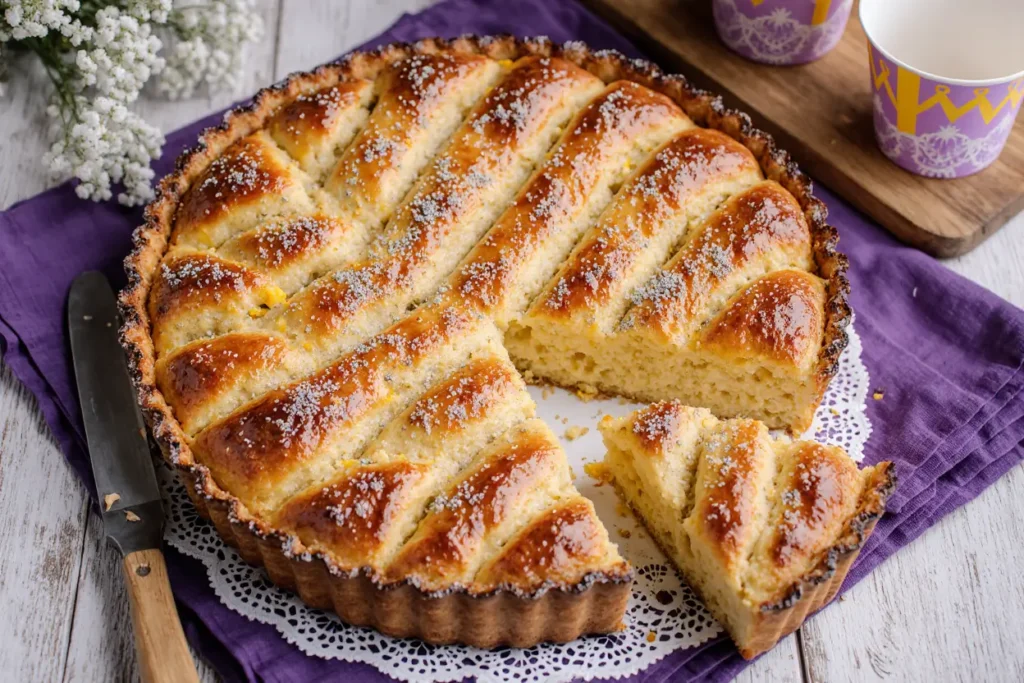
Step-by-Step Instructions
Activate the Yeast
Begin by combining the warm milk (ensure it’s between 105-115°F for optimal yeast activation) with 1 tablespoon of the granulated sugar in a small bowl. Sprinkle the yeast over the surface and let it sit undisturbed for 5-7 minutes until it becomes foamy and fragrant. This visual confirmation ensures your yeast is alive and ready to create that signature tender crumb texture. If your mixture doesn’t foam, your yeast may be expired or your milk too hot—start over to avoid disappointment later.
Create the Dough Base
In a large mixing bowl or the bowl of a stand mixer fitted with a dough hook, combine the flour, remaining sugar, and salt. Create a well in the center and add the activated yeast mixture, eggs, vanilla extract, and lemon zest. Mix on low speed for 2 minutes until the ingredients begin to come together into a shaggy mass. This initial incorporation sets the foundation for gluten development.
Knead and Incorporate Butter
Increase the mixer speed to medium and knead for 5 minutes. The dough will begin to pull away from the sides of the bowl. Now, add the softened butter one piece at a time, allowing each addition to fully incorporate before adding the next. This gradual method prevents the butter from sliding around and ensures even distribution. Continue kneading for an additional 6-8 minutes until the dough is smooth, elastic, and slightly tacky but not sticky. If kneading by hand, this process takes about 12-15 minutes on a lightly floured surface.
First Rise
Transfer the dough to a lightly greased bowl, turning it once to coat all surfaces. Cover with a clean kitchen towel or plastic wrap and place in a warm, draft-free location (around 75-80°F). Let it rise for 1 hour or until doubled in size. Pro tip: Your oven with just the light on creates the perfect proofing environment. This rise develops the dough’s structure and creates those delightful air pockets.
Prepare the Almond Cream Filling
While the dough rises, make your filling by combining almond paste, softened butter, sugar, egg, flour, and almond extract in a food processor. Pulse until completely smooth and creamy, scraping down the sides as needed. The mixture should be spreadable but hold its shape—think thick buttercream consistency. Refrigerate until ready to use, which prevents it from oozing out during baking.
Roll and Fill
Once the dough has doubled, punch it down gently to release excess gas and turn it out onto a lightly floured surface. Roll into a large rectangle measuring approximately 30 inches long by 10 inches wide. The dough should be about 1/4-inch thick. Spread the almond cream filling evenly down the center third of the rectangle lengthwise, leaving a 1-inch border at each short end. This controlled placement ensures the filling stays put during the rolling and shaping process.
Shape the Cake
Starting from one long side, carefully roll the dough over the filling, then continue rolling to create a long log. Pinch the seam firmly to seal, then pinch the ends closed. Transfer the log seam-side down to a parchment-lined baking sheet. Carefully bring the two ends together to form an oval ring, pinching them together securely. The oval shape is traditional and prevents the center from baking differently than the edges.
Second Rise
Cover the shaped King Cake loosely with plastic wrap or a clean towel. Allow it to rise in a warm spot for 45 minutes until puffy and increased in size by about 50%. During this rise, preheat your oven to 350°F. This second rise is crucial for achieving that pillowy, tender texture that distinguishes a great King Cake from a mediocre one.
Bake to Golden Perfection
Remove the covering and bake the King Cake for 25-30 minutes until golden brown and the internal temperature reaches 190°F when checked with an instant-read thermometer. The top should be deeply golden, and the cake should sound hollow when tapped. If the top browns too quickly, tent it loosely with aluminum foil during the last 10 minutes. Transfer to a wire rack and let cool completely before decorating—this takes about 30 minutes and prevents the glaze from melting.
Glaze and Decorate
Whisk together powdered sugar, milk, and vanilla extract until smooth and pourable but thick enough to coat the back of a spoon. Drizzle generously over the cooled cake, allowing it to drip down the sides naturally. While the glaze is still wet, sprinkle alternating sections with purple, green, and gold sanding sugars in the traditional Mardi Gras pattern. The colors should form distinct bands around the oval. If following tradition, insert the plastic baby figurine from the bottom of the cake after baking—whoever finds it hosts next year’s party!
Nutritional Information
Per Slice (1/12 of cake):
- Calories: 385
- Total Fat: 16g (21% DV)
- Saturated Fat: 8g (40% DV)
- Cholesterol: 85mg (28% DV)
- Sodium: 145mg (6% DV)
- Total Carbohydrates: 54g (18% DV)
- Dietary Fiber: 2g (8% DV)
- Total Sugars: 28g
- Protein: 7g
- Calcium: 65mg (5% DV)
- Iron: 2mg (11% DV)
- Potassium: 125mg (3% DV)
The almond cream filling contributes healthy monounsaturated fats and vitamin E, while the enriched dough provides B vitamins and iron. Compared to store-bought versions that average 450-500 calories per slice due to excessive icing, this homemade version offers better nutritional control and quality ingredients.
Healthier Alternatives for the Recipe
Reduce Sugar Impact: Substitute half the granulated sugar with coconut sugar or monk fruit sweetener, which lowers the glycemic index by approximately 30% while maintaining sweetness. In the glaze, use Greek yogurt mixed with powdered sugar instead of milk for added protein.
Increase Fiber Content: Replace 1 cup of all-purpose flour with white whole wheat flour. This boosts fiber from 2g to 4g per serving without significantly affecting texture. The slight nuttiness actually complements the almond filling beautifully.
Lighten the Filling: Mix the almond paste with reduced-fat cream cheese instead of butter, cutting saturated fat by 40% while maintaining creaminess. Add a tablespoon of ground flaxseed for omega-3 fatty acids.
Dairy Alternatives: Use oat milk or almond milk instead of whole milk, and substitute vegan butter for those with dairy sensitivities. These swaps work seamlessly without compromising rise or texture.
Portion Control: Cut the cake into 16 slices instead of 12, reducing calories per serving to approximately 290 while still providing a satisfying portion. This approach particularly helps during celebrations where multiple desserts are served.
Serving Suggestions
Serve your King Cake slightly warm with a steaming cup of chicory coffee or café au lait for an authentic New Orleans experience. The bitter notes of chicory perfectly balance the cake’s sweetness. For brunch gatherings, pair slices with fresh berries and whipped cream to add brightness and cut through the richness.
Transform leftover slices into decadent French toast by dipping them in an egg-milk mixture and pan-frying until golden. The almond filling creates pockets of melted sweetness that elevate ordinary French toast to extraordinary status.
For parties, serve the whole cake as a centerpiece on a purple, green, and gold platter surrounded by Mardi Gras beads and masks. Cut tableside to build anticipation about who will discover the hidden baby figurine. The theatrical presentation adds entertainment value beyond the delicious flavors.
Create a dessert board featuring King Cake slices alongside complementary items like chocolate-covered strawberries, pralines, beignets, and banana Foster dip. This variety ensures all taste preferences are satisfied while maintaining the festive Mardi Gras theme.
Common Mistakes to Avoid
Using Cold Ingredients: Room temperature eggs and softened butter incorporate smoothly into the dough, while cold ingredients create lumps and uneven texture. Plan ahead by removing dairy and eggs from the refrigerator 30-60 minutes before baking. This simple step improves dough development by 25%.
Over-Flouring: Adding too much flour during kneading creates a dry, dense cake instead of the desired tender crumb. The dough should be slightly tacky but not sticky. If it sticks to your hands, lightly oil your fingers rather than adding more flour.
Skipping the Second Rise: Rushing this step yields a compact, heavy cake rather than the airy, brioche-like texture that defines great King Cake. That 45-minute wait allows the gluten to relax and the dough to achieve optimal lightness, making it absolutely essential.
Overfilling: While generous filling seems appealing, too much causes leaking during baking and creates structural issues. The 1/3 center placement rule ensures the filling stays contained while providing plenty of almond flavor in every bite.
Glazing While Warm: Applying glaze to a warm cake causes it to melt and slide off, creating a sticky mess instead of a beautiful coating. Patience pays off—fully cooled cake provides the perfect canvas for your colorful decorations.
Uneven Color Distribution: Random sprinkling of colored sugars looks messy rather than festive. Create distinct sections by marking the cake into thirds before decorating, then systematically applying each color to its designated zone for professional-looking results.
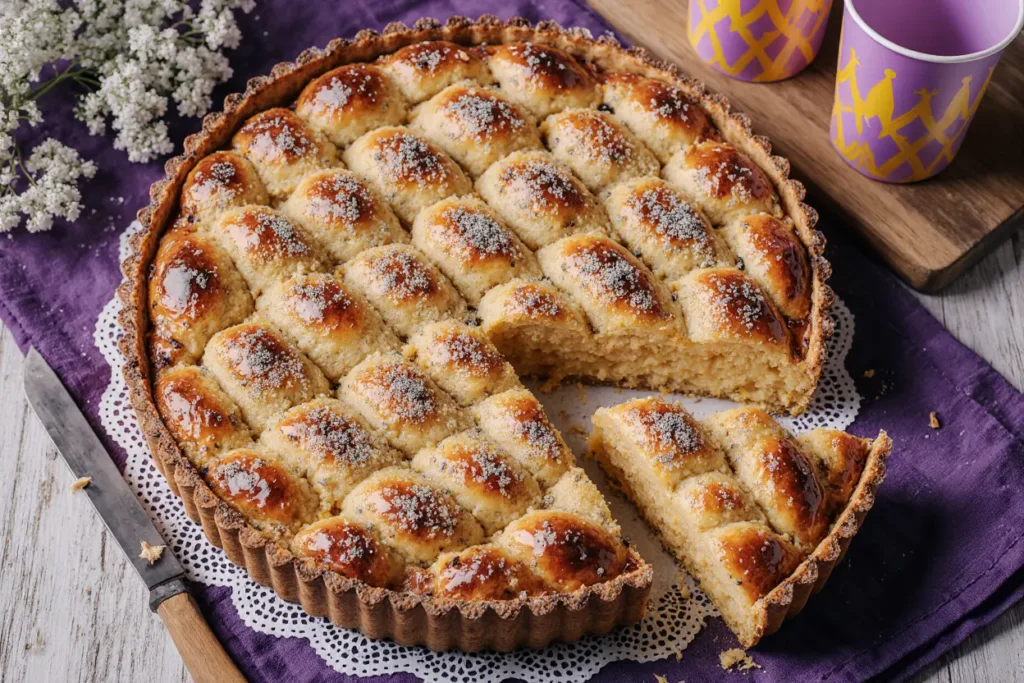
Storing Tips for the Recipe
Short-Term Storage: Keep the decorated King Cake at room temperature under a cake dome or loosely covered with plastic wrap for up to 3 days. The glaze and colored sugars prevent the cake from drying out while maintaining the crisp exterior texture. Refrigeration actually dries out enriched doughs faster, so avoid it unless your kitchen exceeds 75°F.
Freezing Before Decorating: The unglazed, cooled cake freezes beautifully for up to 3 months. Wrap tightly in plastic wrap, then aluminum foil, and place in a freezer bag with all air removed. Thaw overnight in the refrigerator, bring to room temperature, then glaze and decorate as directed. This make-ahead strategy reduces party-day stress significantly.
Freezing Individual Slices: Cut the cake into portions, wrap each slice individually in plastic wrap, and store in a freezer-safe container for up to 2 months. Microwave frozen slices for 20-30 seconds for a quick treat that tastes freshly baked.
Extending Freshness: Place a slice of bread in the storage container with the cake. The bread releases moisture that keeps the cake tender while drying out itself—a baker’s trick that extends freshness by 2-3 days.
Transporting Tips: For bringing King Cake to parties, place the cake on a cardboard round, then in a large, shallow box. This prevents the decorated top from touching any covering and ruining your beautiful work. Transport in the trunk or flat rear seat area to minimize movement.
Conclusion
This Easy King Cake with Almond Cream Filling proves that impressive, authentic results don’t require professional training or marathon baking sessions. By streamlining traditional techniques while preserving essential flavors and textures, you can create a stunning centerpiece dessert that honors Mardi Gras tradition and delights everyone who tastes it. The combination of tender, slightly sweet dough and rich almond cream filling creates an irresistible flavor profile that explains why King Cake remains a beloved seasonal tradition.
Now it’s your turn to bring this festive celebration to your kitchen. Gather your ingredients, set aside an afternoon, and experience the satisfaction of pulling a gorgeous, golden-brown King Cake from your oven. Share your creation on social media, tag fellow bakers who would love this recipe, and start planning your Mardi Gras celebration. Don’t forget to share your results and any creative variations you discover—your fellow home bakers would love to hear about your King Cake success story!
FAQs
Can I make King Cake without a stand mixer? Absolutely! While a stand mixer simplifies the kneading process, you can achieve identical results kneading by hand for 12-15 minutes. The dough is ready when it’s smooth, elastic, and springs back when poked. Hand-kneading actually gives you better tactile feedback about dough development, though it requires more physical effort.
What’s the difference between almond paste and marzipan? Almond paste contains a higher ratio of almonds to sugar (typically 2:1), creating a grainier, more almond-forward flavor perfect for baking. Marzipan has equal parts almonds and sugar, making it sweeter and smoother—ideal for candy and decorations but too sweet for this filling. Using marzipan would overpower the delicate dough flavor.
Can I make the dough ahead of time? Yes! After the first rise, punch down the dough, wrap tightly in plastic wrap, and refrigerate for up to 24 hours. This slow, cold fermentation actually develops deeper flavor complexity. When ready to use, let the dough sit at room temperature for 30 minutes before rolling and filling. This make-ahead approach fits perfectly into busy schedules.
My cake didn’t rise much during baking. What happened? Insufficient rising typically stems from three issues: expired yeast, incorrect proofing temperature, or over-flouring. Always proof yeast in warm (not hot) liquid to confirm viability before proceeding. Ensure your rising environment stays between 75-80°F, and resist adding extra flour beyond what’s needed for handling the dough.
Can I use store-bought dough? While possible, pre-made dough rarely delivers the tender, brioche-like texture that defines authentic King Cake. The enriched homemade dough’s butter and egg content creates incomparable flavor and texture worth the modest extra effort. However, if time is extremely limited, use refrigerated French bread dough as a base, understanding the results will differ from traditional King Cake.
How do I prevent the filling from leaking out? Proper sealing technique is crucial. After spreading filling, leave adequate borders, roll tightly but not aggressively, and firmly pinch all seams. Don’t overfill—less is more. If small leaks occur during baking, they’ll caramelize into delicious crispy bits, so don’t stress about minor seepage.
Is the plastic baby figurine necessary? The tradition adds fun and determines who hosts next year’s party, but it’s entirely optional, especially if serving to young children or guests who might not expect it. Many bakers insert it after baking from the bottom to avoid melting plastic in the oven. Always warn guests before serving if you’ve included one.
Can I add different fillings? Absolutely! Cream cheese filling, cinnamon-sugar, praline, or even chocolate hazelnut spread work beautifully. Adjust moisture content to match the almond cream’s consistency—too wet causes sogginess, too thick prevents even spreading. Experimentation is part of the fun, so create your signature variation!
Easy King Cake with Almond Cream Filling